As gongshi, the practice of appreciating rocks, originated in China during the Han Dynasty (206 BCE – 220 CE) and, like many cultural developments, later spread to Korea (suseok) and Japan (suiseki). It was shaped not only by the region’s geology but also by philosophical traditions such as Daoism and Confucianism, both of which place great value on contemplation and close observation of the natural world in order to gain knowledge or enlightenment for spiritual growth. Today, however, not all of these stone concepts have much to do with nature, let alone contemplation. Some even represent the exact opposite of an ode to Mother Nature. But in the Anthropocene, is anything left untouched by humans? Like stones collected on a beach, we’ve gathered a selection of projects that could be read as expressions of a longing for a life more closely connected to nature—or simply as yet another attempt to create “something new” within capitalism. Decide for yourself.
Thomas Yang Studio
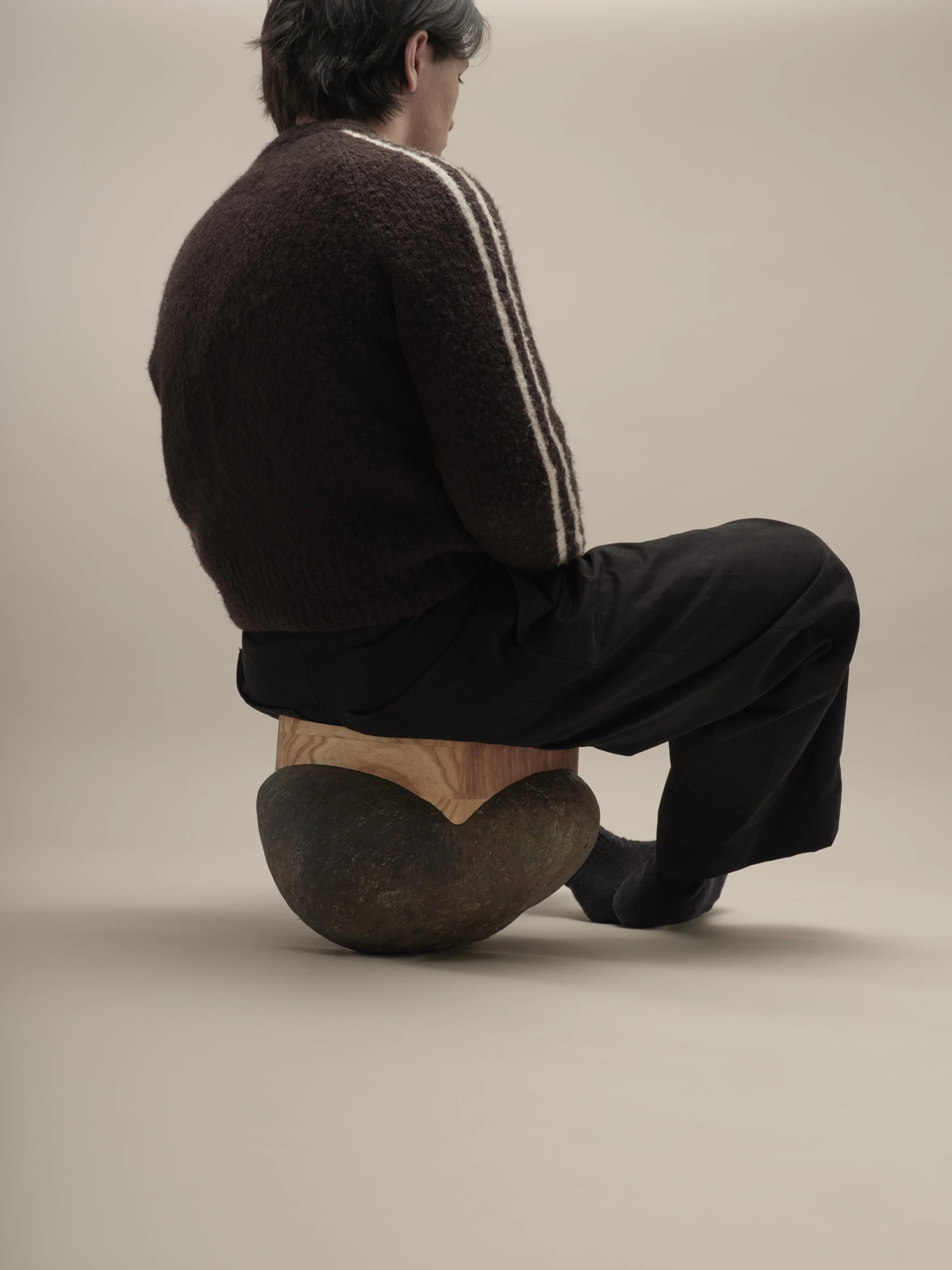
Taiwanese and Northern Italian designer Thomas Yang describes his work as “a love letter to daily use and finding balance.” Growing up collecting “the perfect stone” with his family by the seaside, Yang has transformed this personal fascination into a design philosophy that explores the relationship between nature, craft, and everyday rituals. This approach comes to life in pieces such as his Rocking Rock Stools, where selected stones are paired with handcrafted wooden seats, creating objects that quite literally require balance. On a smaller scale, his tactile Rock Dimmer Switches combine wood and stone to turn the simple act of adjusting light into a sensory experience.
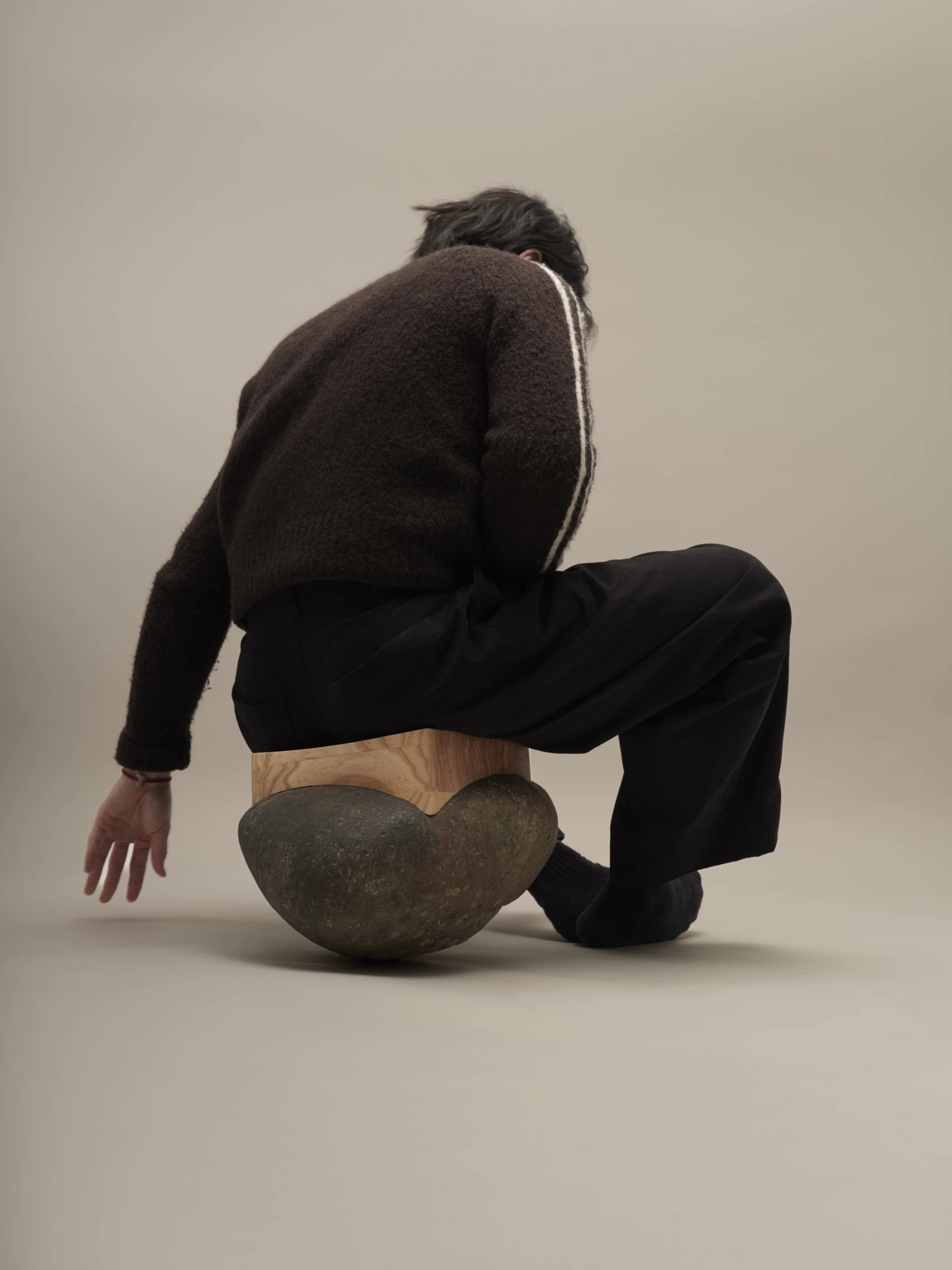
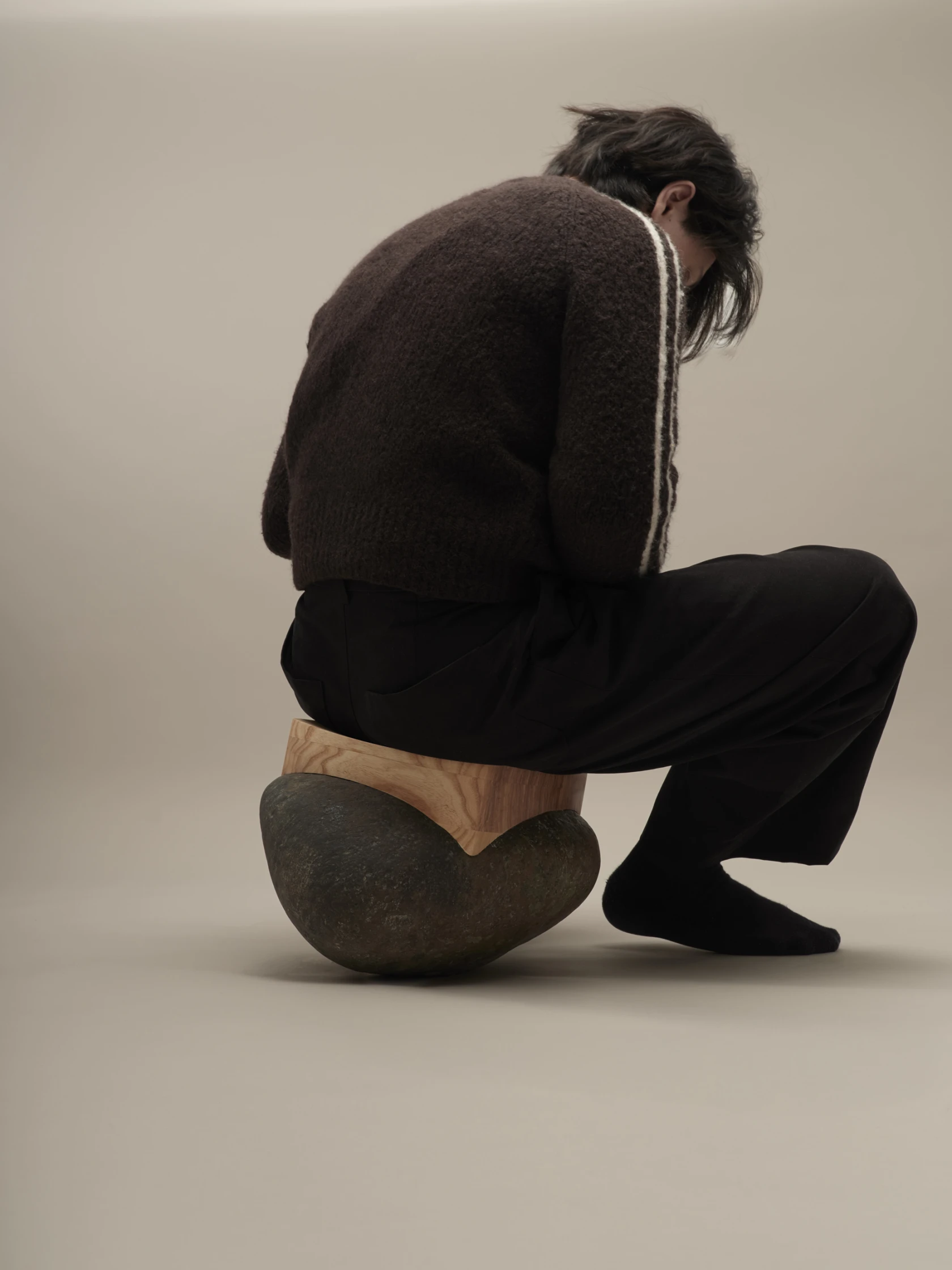
For Yang, however, stone is more than an aesthetic choice. It represents what he calls “an anti-industrial design process” and serves as a critique of the way modern manufacturing distances us from the raw materials that shape our lives. “As a culture, we are so removed from the source of our materials,” he explains. In an age dominated by devices made of plastic, aluminum, and glass, Yang’s work offers a counterpoint. His objects reconnect us with materials that are imperfect and organic, reminding us that design can create not only functional products, but also a deeper awareness of the natural world from which they emerge.
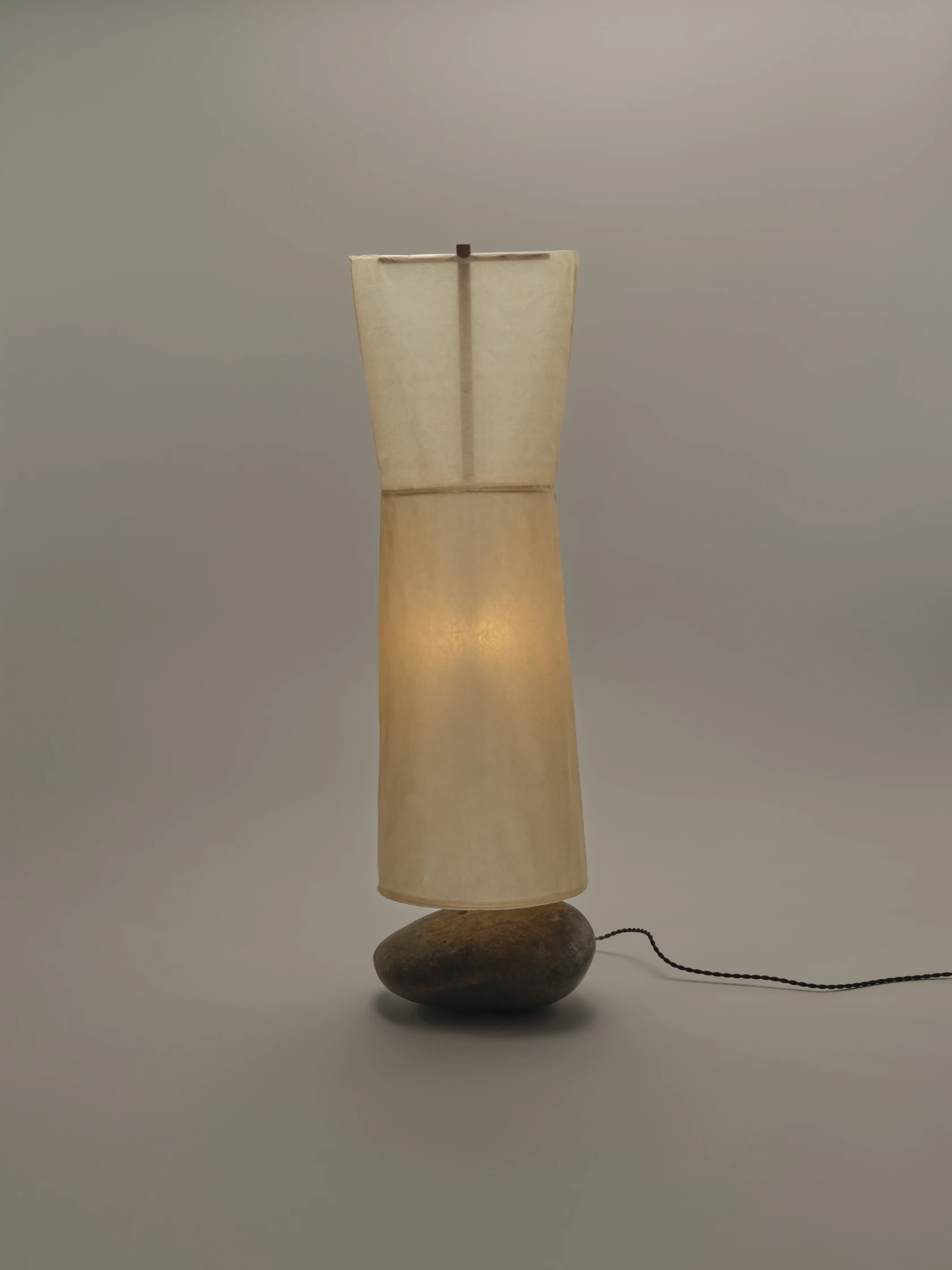
Rock Floor Lamp
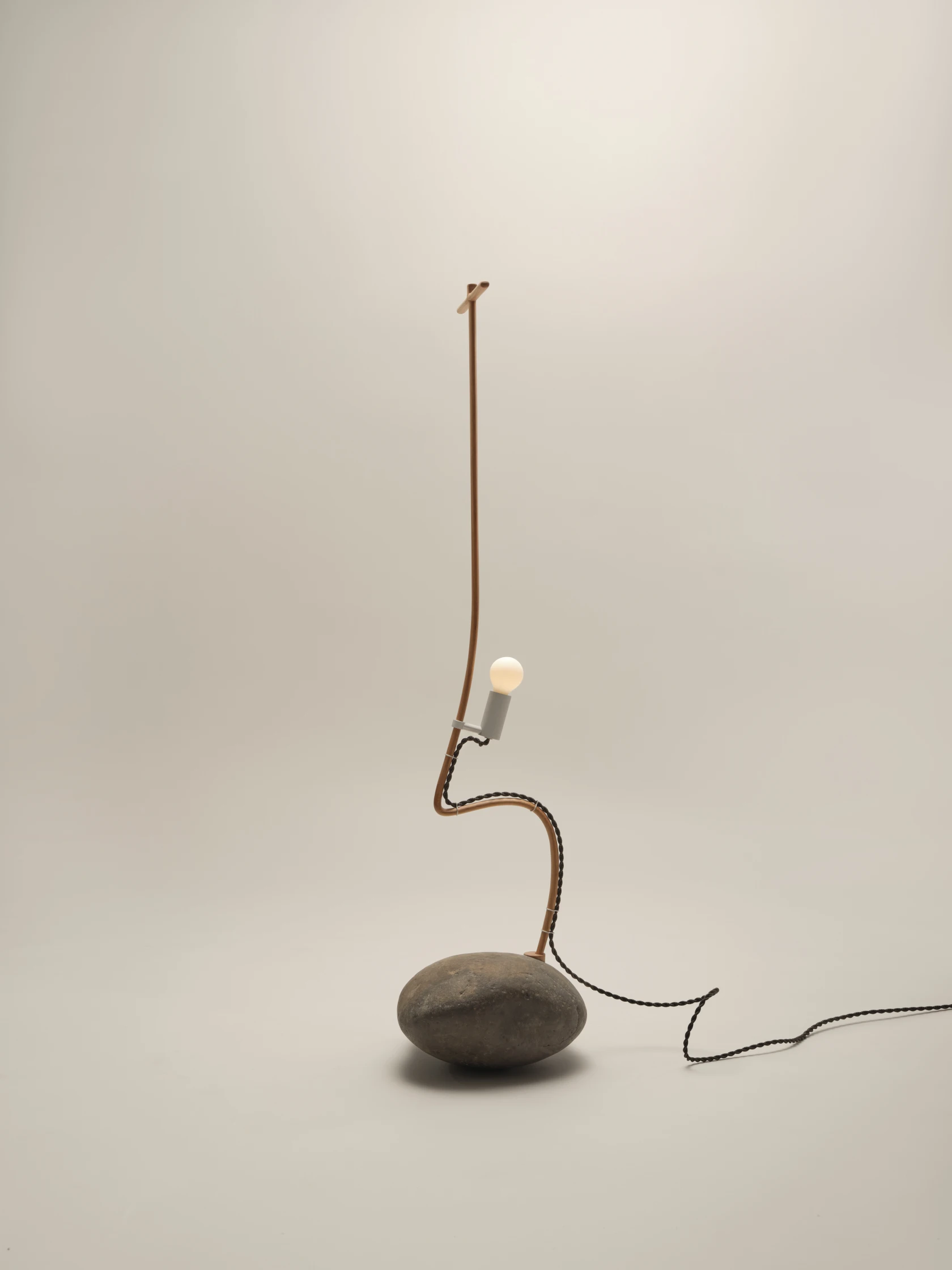
Rock Floor Lamp without shade
Melitta Baumeister x Nike
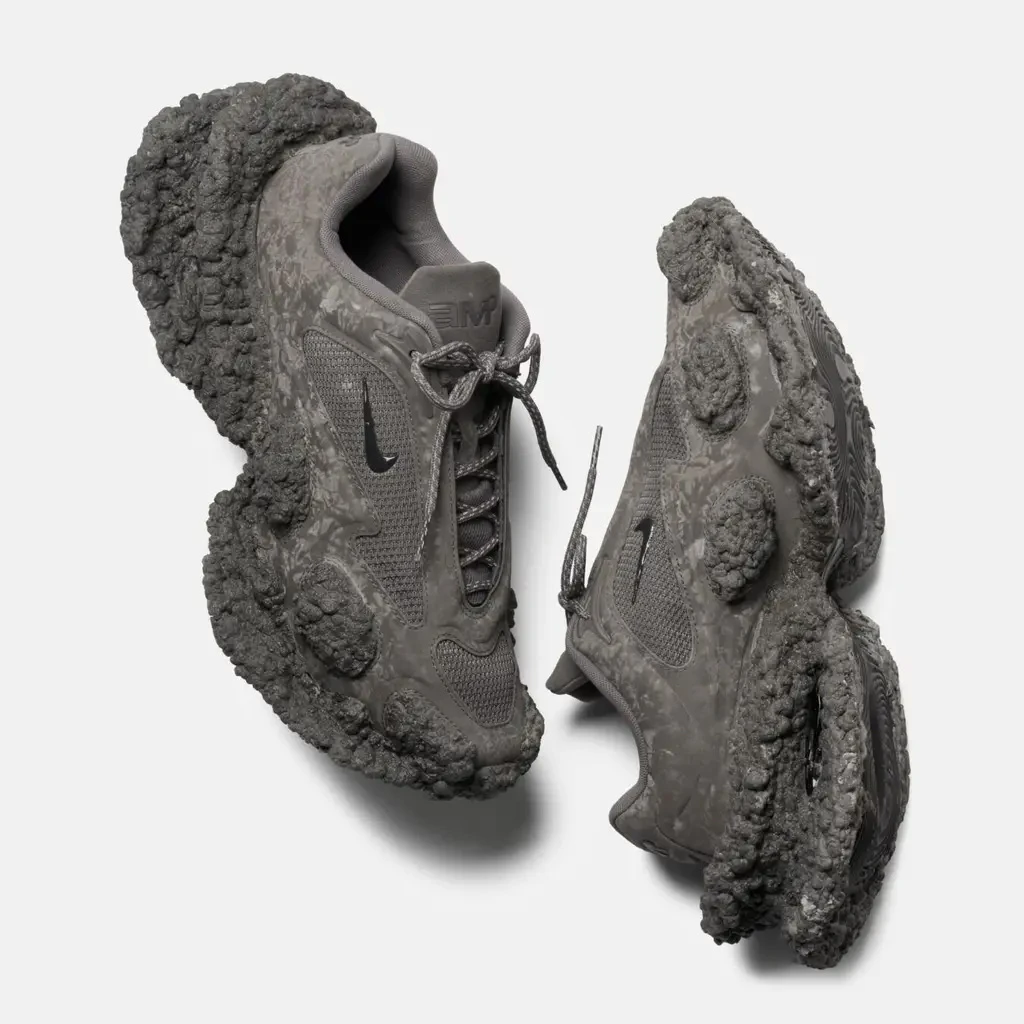
While shoes, from a functional perspective, are designed to create distance from nature and make it more accessible, that doesn’t necessarily mean we can’t keep our feet in nature at the same time. Or at least in an industrialized, oil-based look-alike version of it. In collaboration with Nike, New York–based designer Melitta Baumeister created a concept version of the Nike Air Max Muse that is not only clunky but chunky, too. Essentially a stone disguised as a sneaker, the design completes the circle of Anthropocene appropriation: taking from nature to serve humanity, then shaping it to resemble nature so the extraction becomes less obvious—to humans. It’s such a late-capitalist gesture that we kind of love it. The perfect pair of shoes to enjoy the climate crisis in.
Medieval Manhattan
Yağmur Rüzgar
Artist and designer Yağmur Rüzgar’s work is often site-specific, exploring the relationship between materials, architecture, and place. Medieval Manhattan follows this approach. The work, firstly shown at Conceptual Biennale Berlin, consists of three stones taken from the Italian town of San Gimignano, wrapped in metal sheets and relocated to San Gimignano Lichtenberg, the Berlin-based tower reuse project by architecture office b+. The stones act as gestures of souvenirs, carrying the memory of one place into another. The title Medieval Manhattan refers to San Gimignano’s famous medieval towers while drawing a connection to Manhattan’s skyline. In this context, “Manhattan” stands for the pursuit of height and continuous growth—not only in architecture, but also in financial markets, economic success, and the accumulation of wealth. Through the simple displacement of stone, Rüzgar reflects on how built environments embody cultural values and enduring ideas of progress.
Within the Ruins of Aesthetics and Function
Studio DO
If hungry, eat stone! Or at least eat from stones. Studio DO is a stone cutting atelier (yes, you read right) founded by Dana Seachuga and Octave Vandeweghe based in Rotterdam, Netherlands. While maintaining each their individual practice, with DO they share and express their fascination for (gem)stones, expressed for example in the dinner scenography Within the Ruins of Aesthetics and Function, for which they used discarded stone elements to create new furniture or tableware objects.
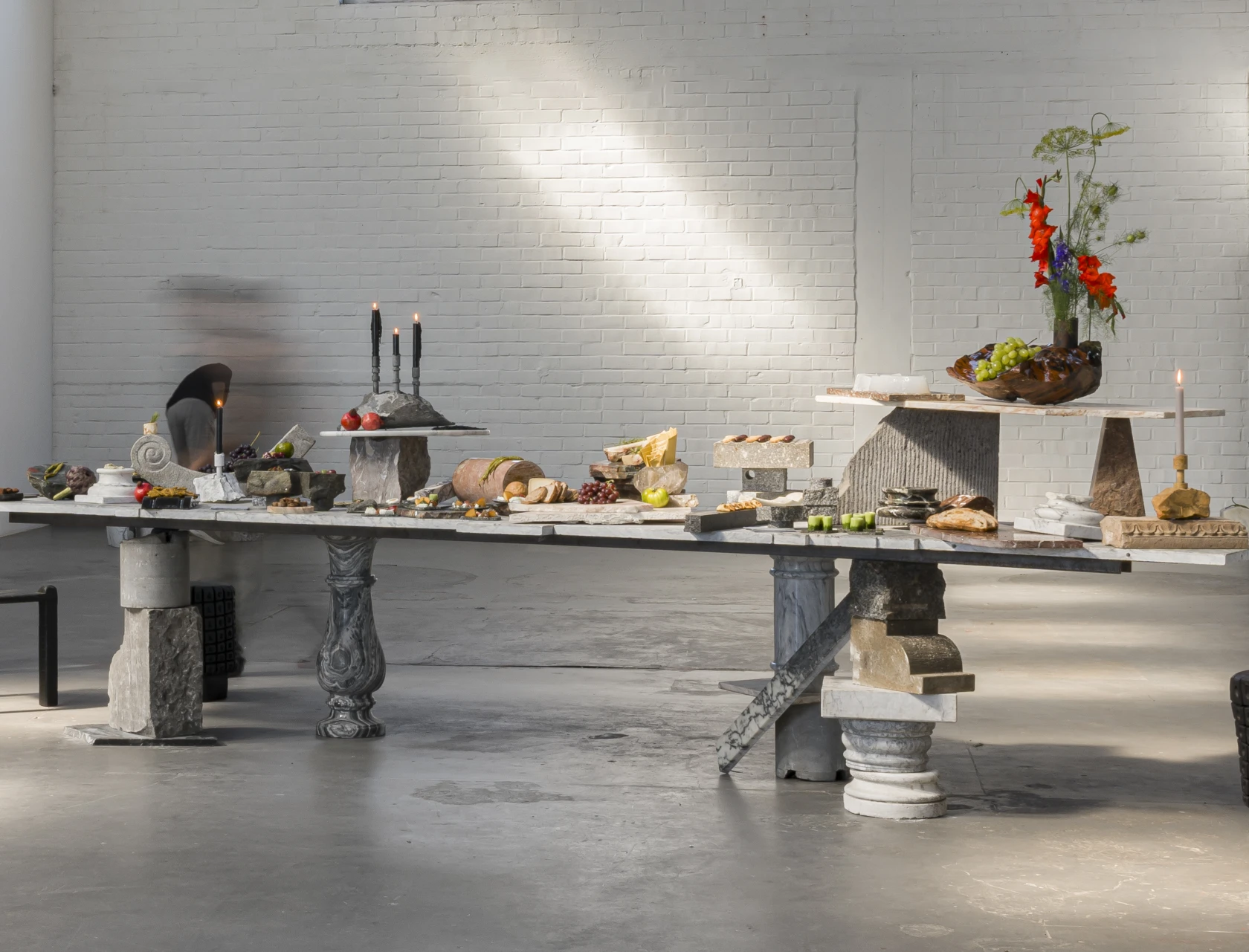
Dinner scenography: Within the Ruins of Aesthetics and Function
Proportions of Stone
Sisan Lee
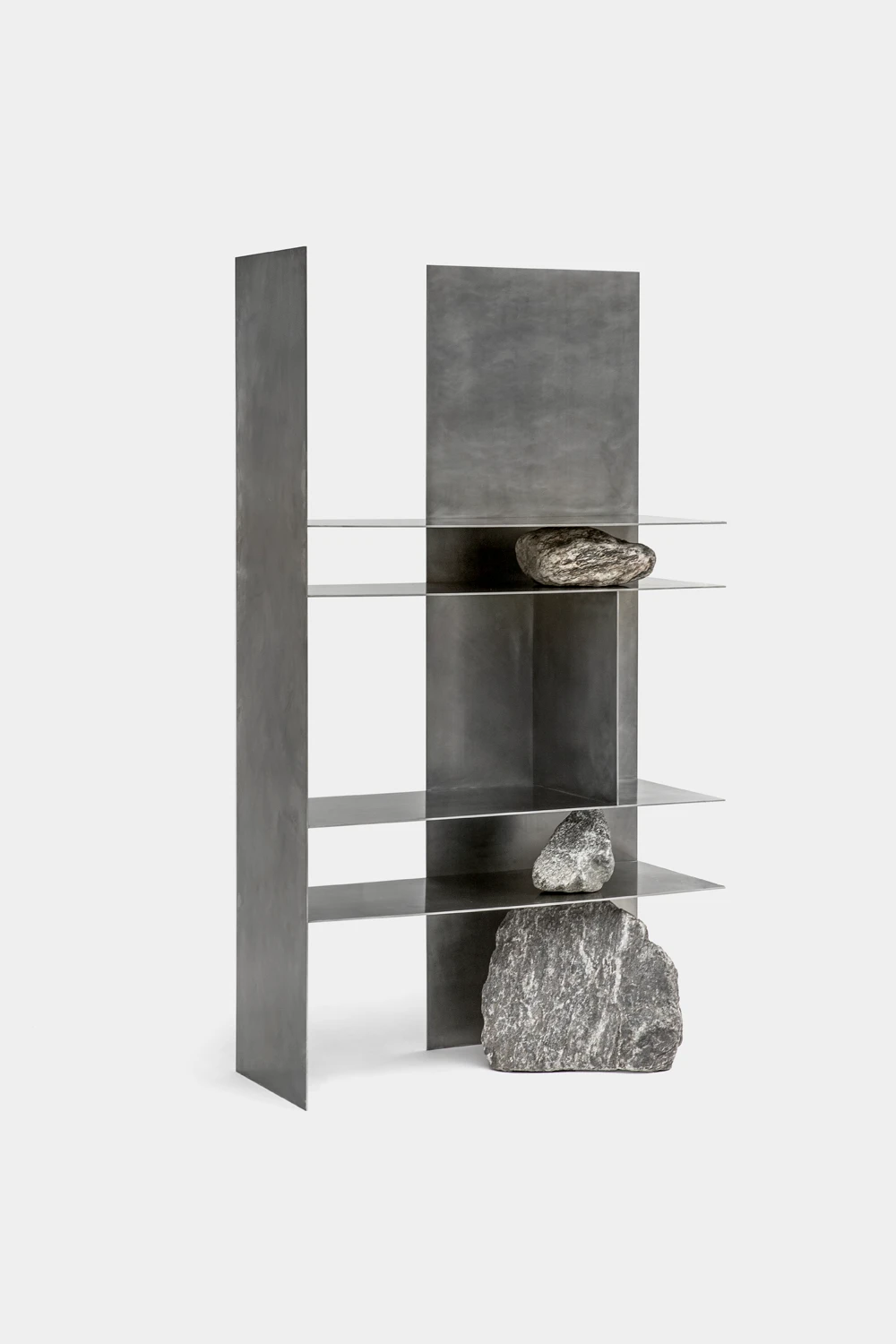
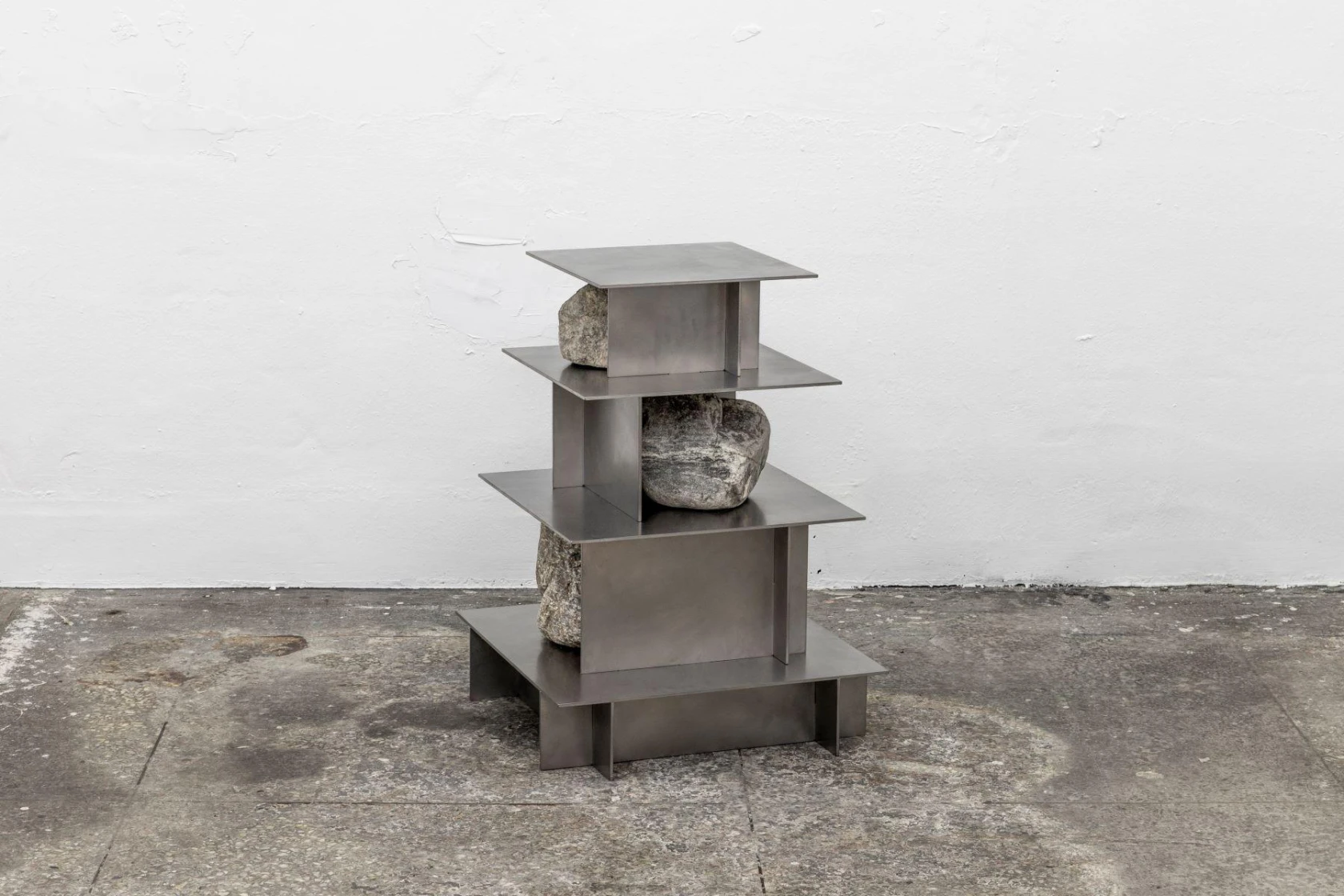
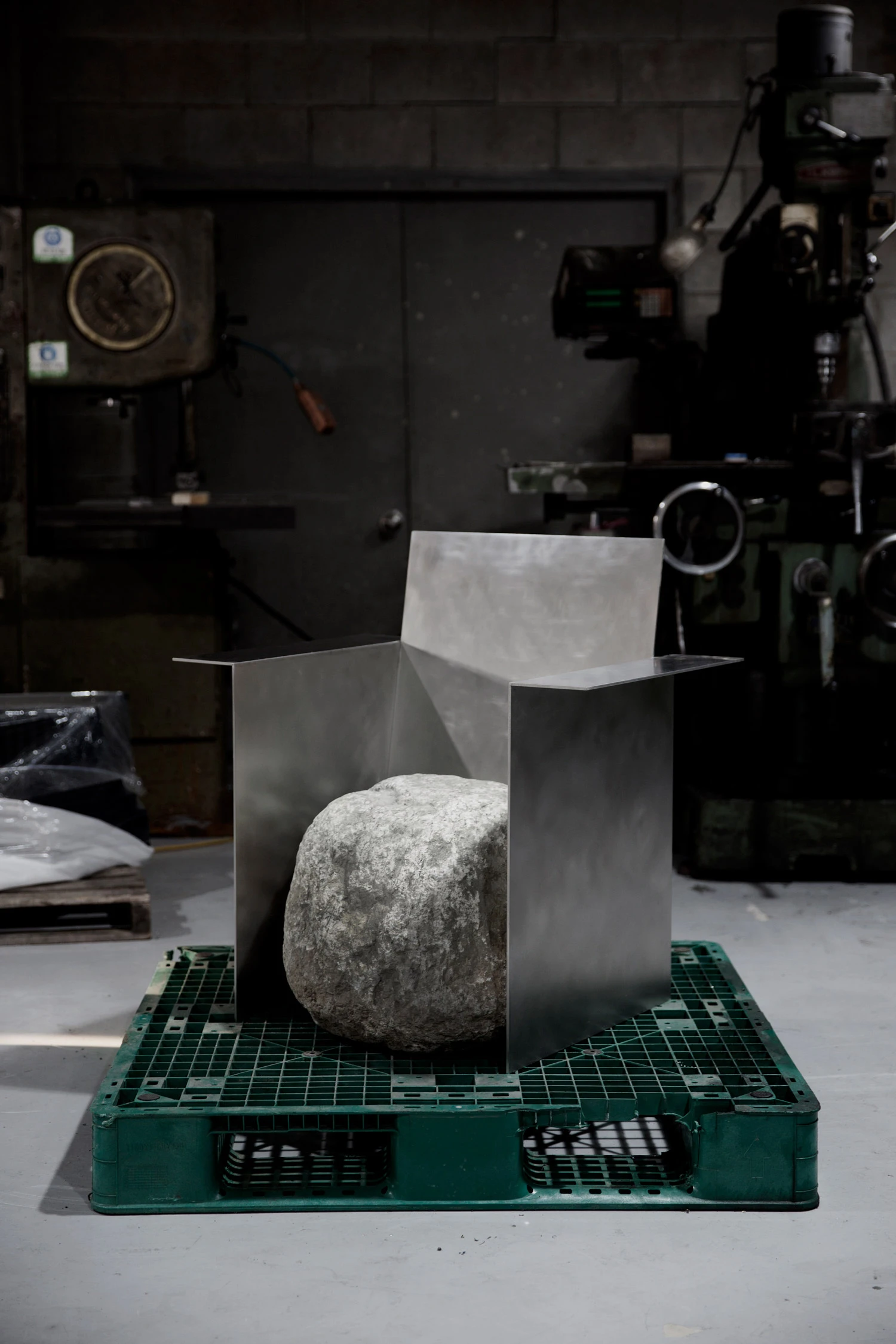
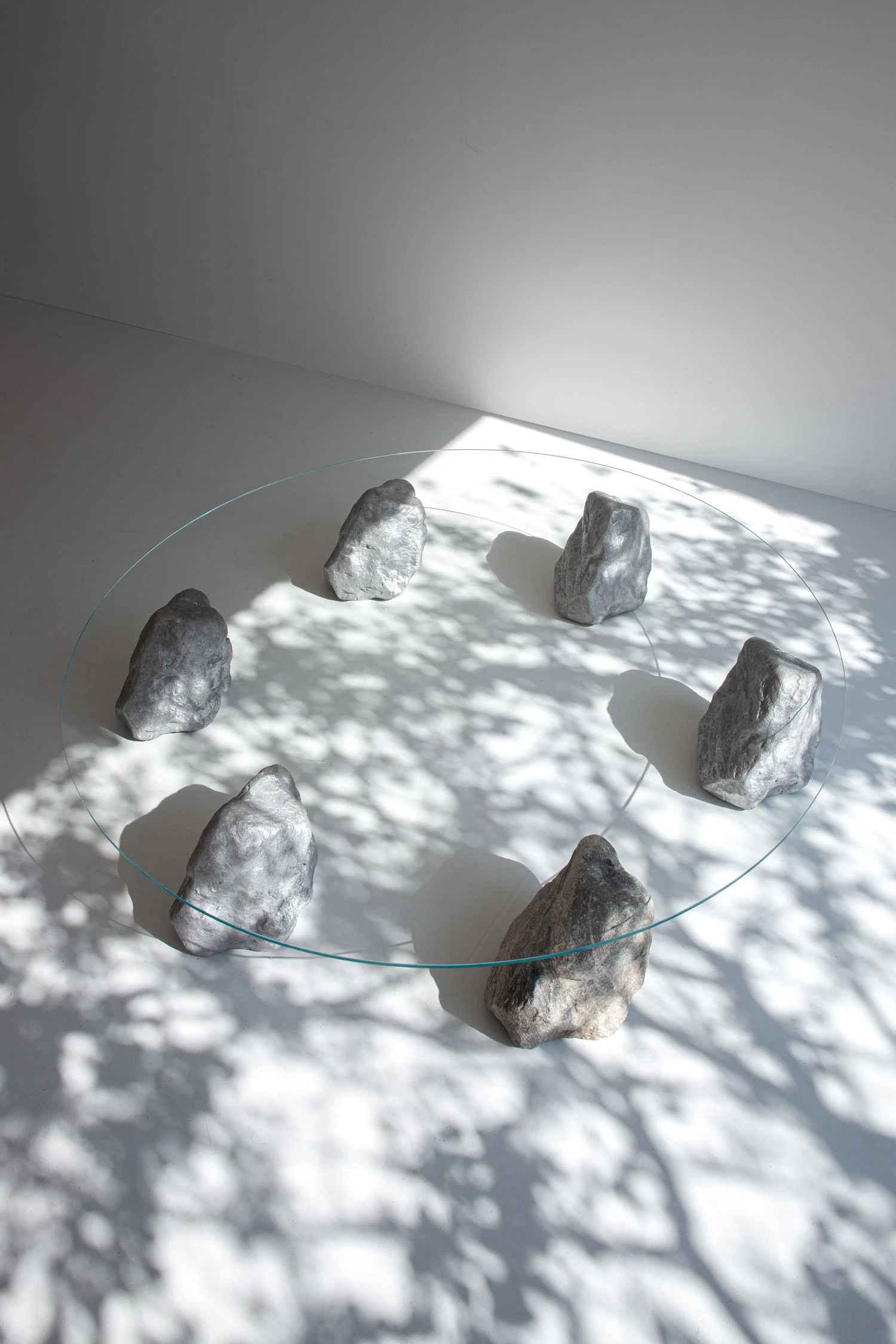
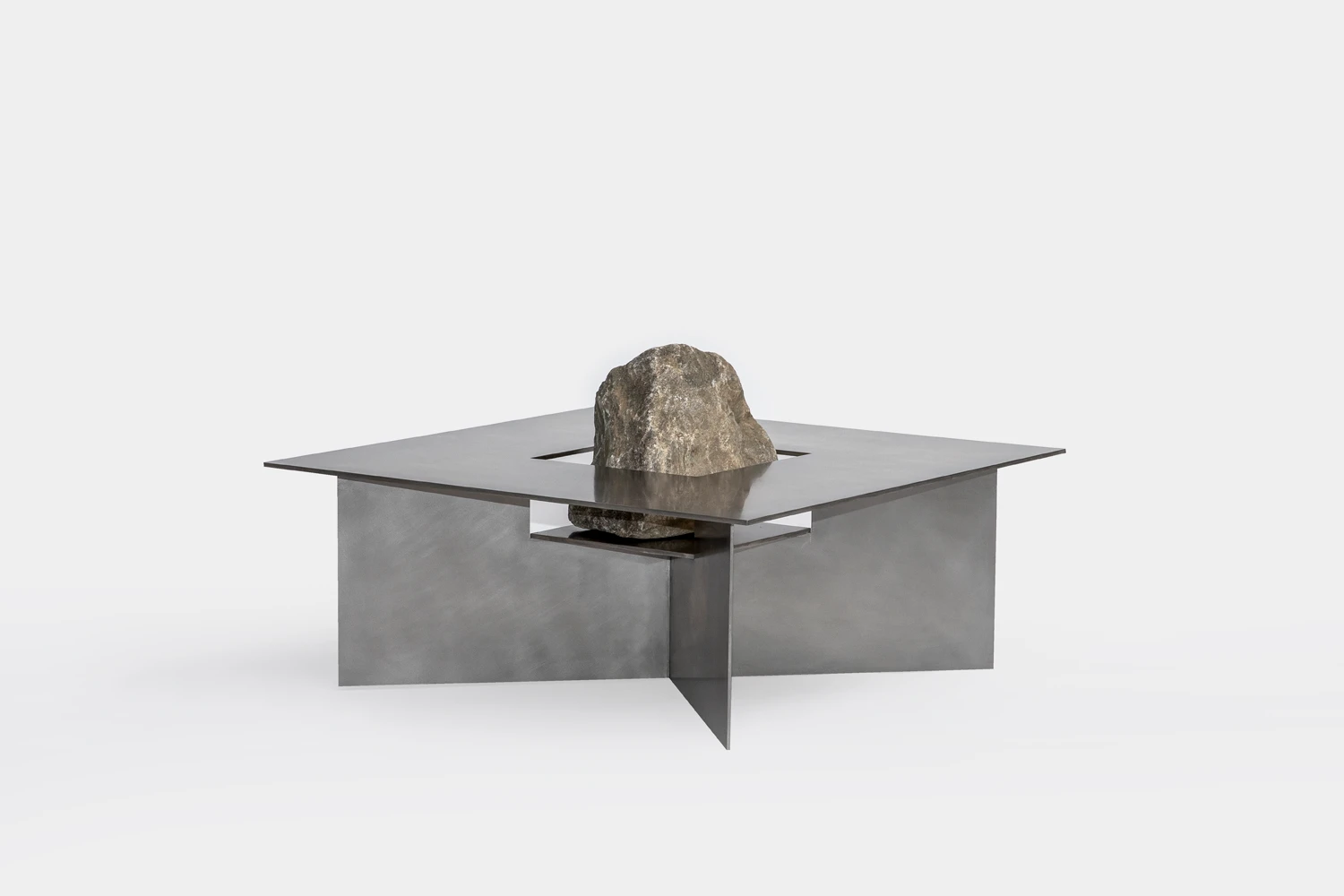
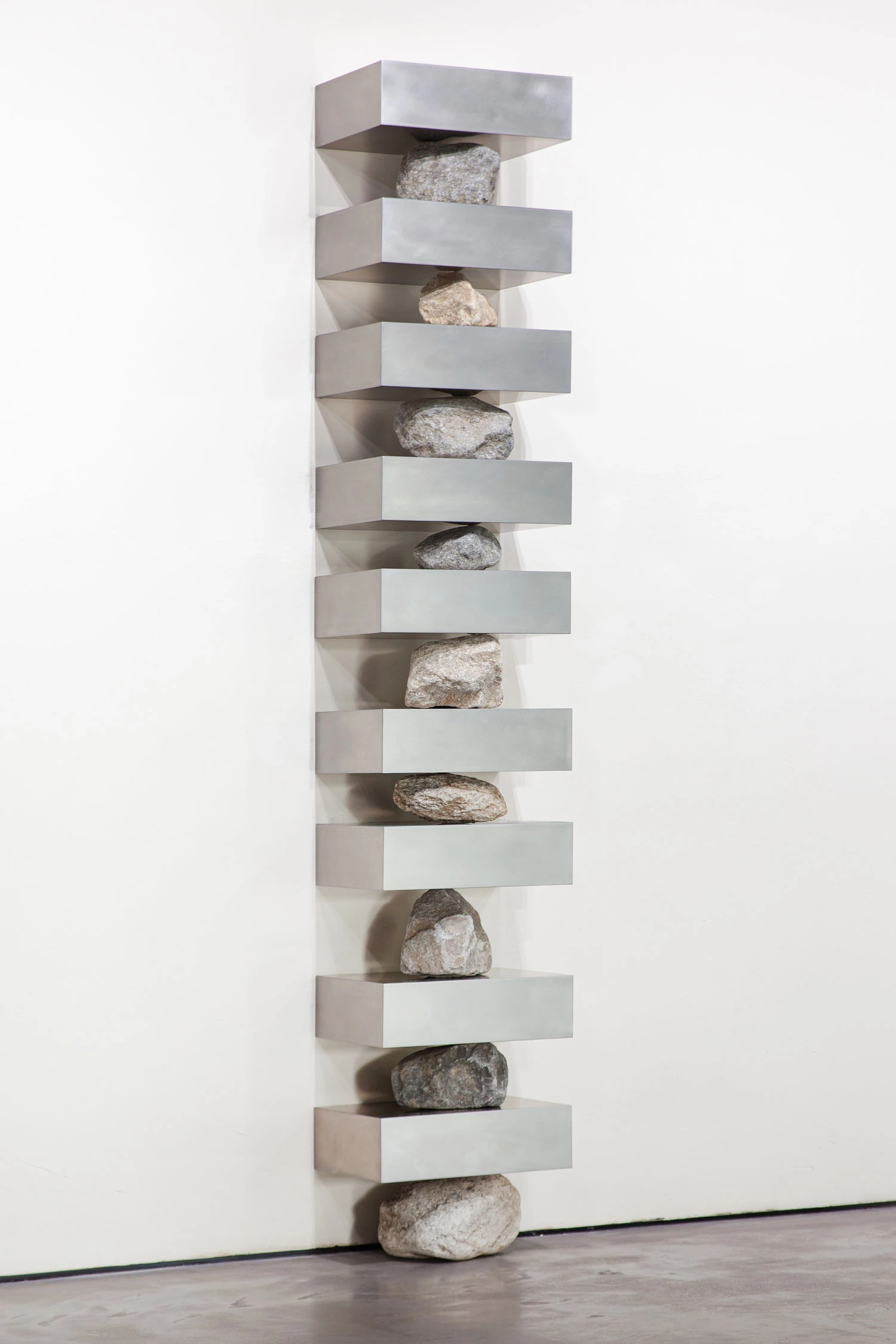
Seoul-based designer Sisan Lee, co-founder of the interior studio Practice, explores the sculptural possibilities that emerge where different times and environments intersect. Situated between modernity and primitivism, nature and industry, it comes as no surprise that stone is one of the defining materials in his work. His ongoing series Proportions of Stone is expressed through a wide variety of typologies, including shelves, chairs, wall sculptures, and pagoda-like structures. Throughout the series, stone remains the pivotal reference—both structurally and proportionally. Rather than reshaping the found stones, Lee constructs precise stainless steel frameworks around them, allowing the existing forms to determine the composition. Using stone as the starting point is not merely a stylistic device. It reflects Lee’s philosophical understanding of nature as the most significant influence on design. In his work, stone is treated not simply as a material, but as the origin of form and meaning.
Flintstone
Giulio Waiging Sammarro
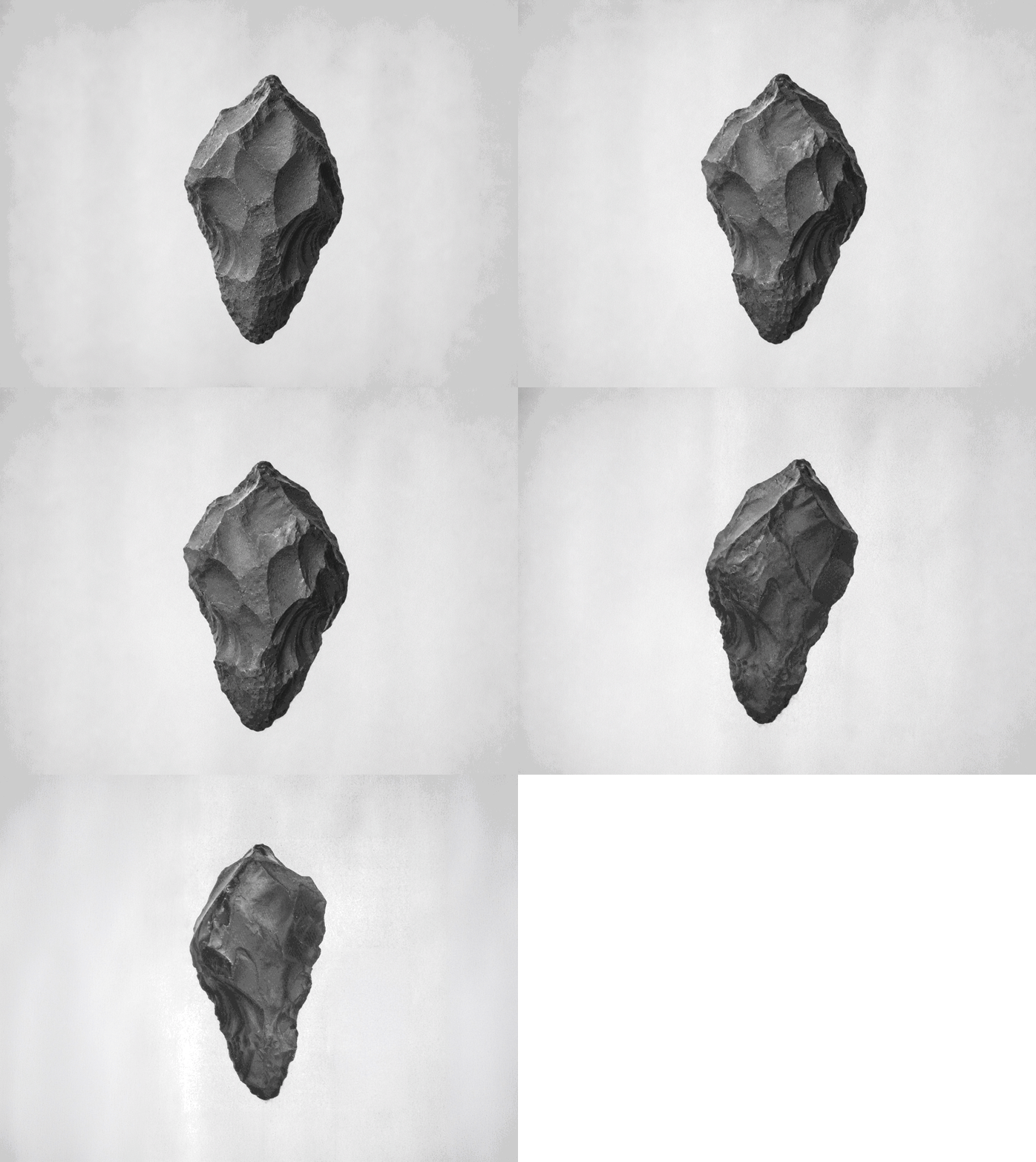
Doomed to eternal pain, Prometheus, who stole fire from the gods and gave it to humanity, would probably be proud of this 3D-printed “fire stone.” Conceived as extension for a lighter, this work by Berlin-based designer Giulio Waiging Sammarro connects not only antiquity with the present, but also humanity’s earliest history as toolmakers. Hand axes are among the oldest artifacts ever discovered, making this object a symbol of contemporary design: no longer driven by necessity, but by the luxury of being delightfully impractical.
Join our community to post comments.
Login
Create account
Recent Comments
No comments yet.