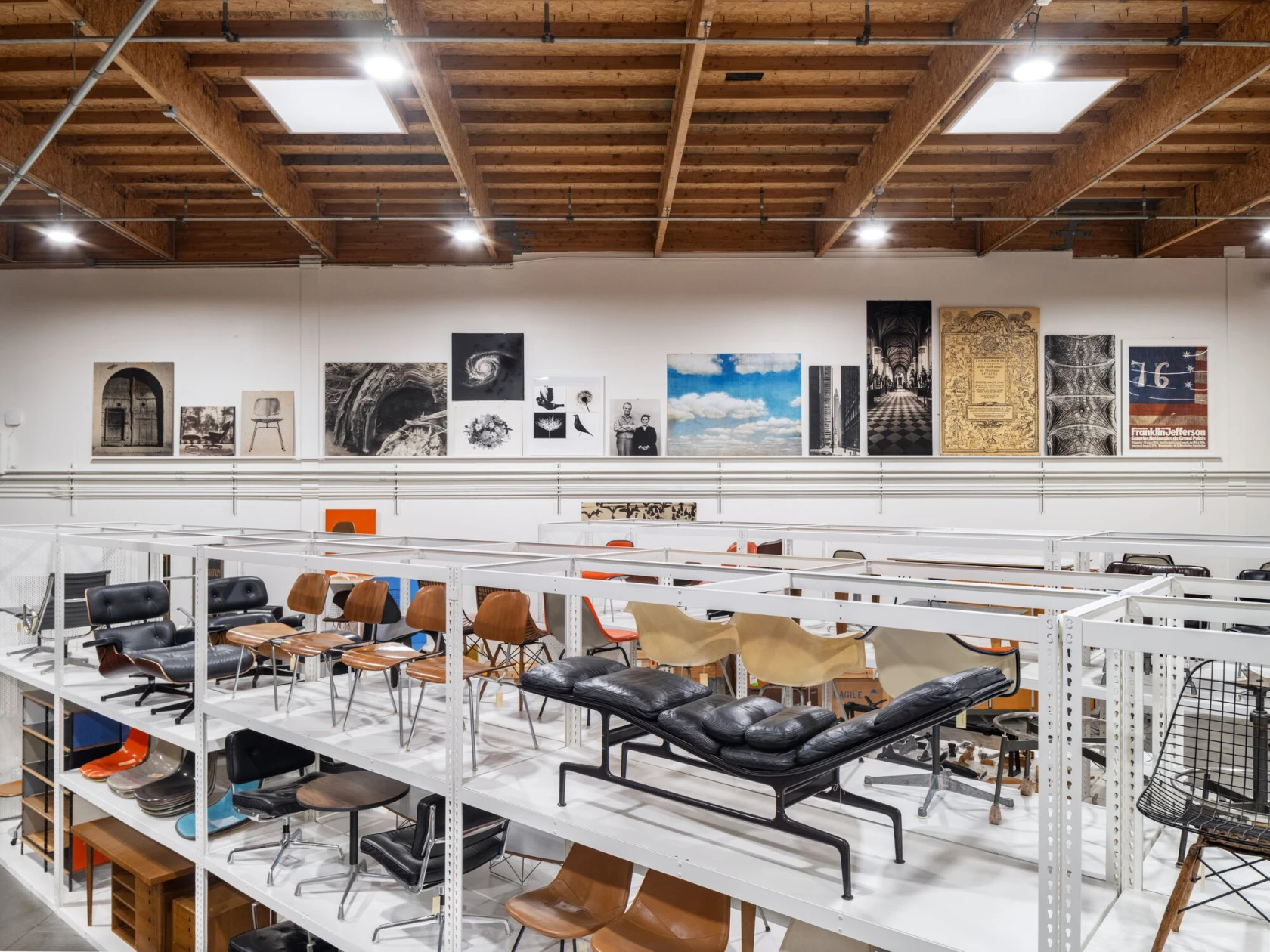
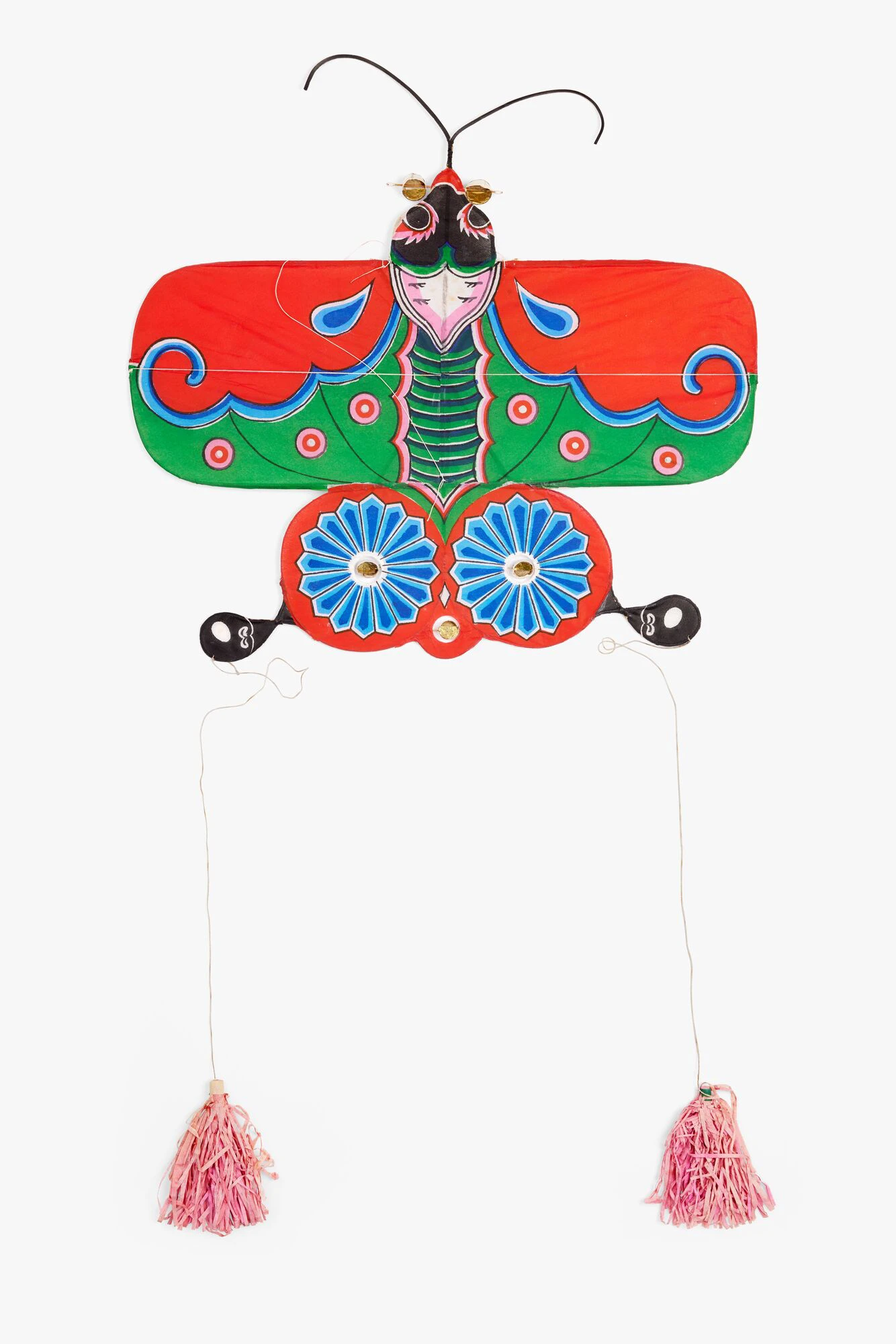
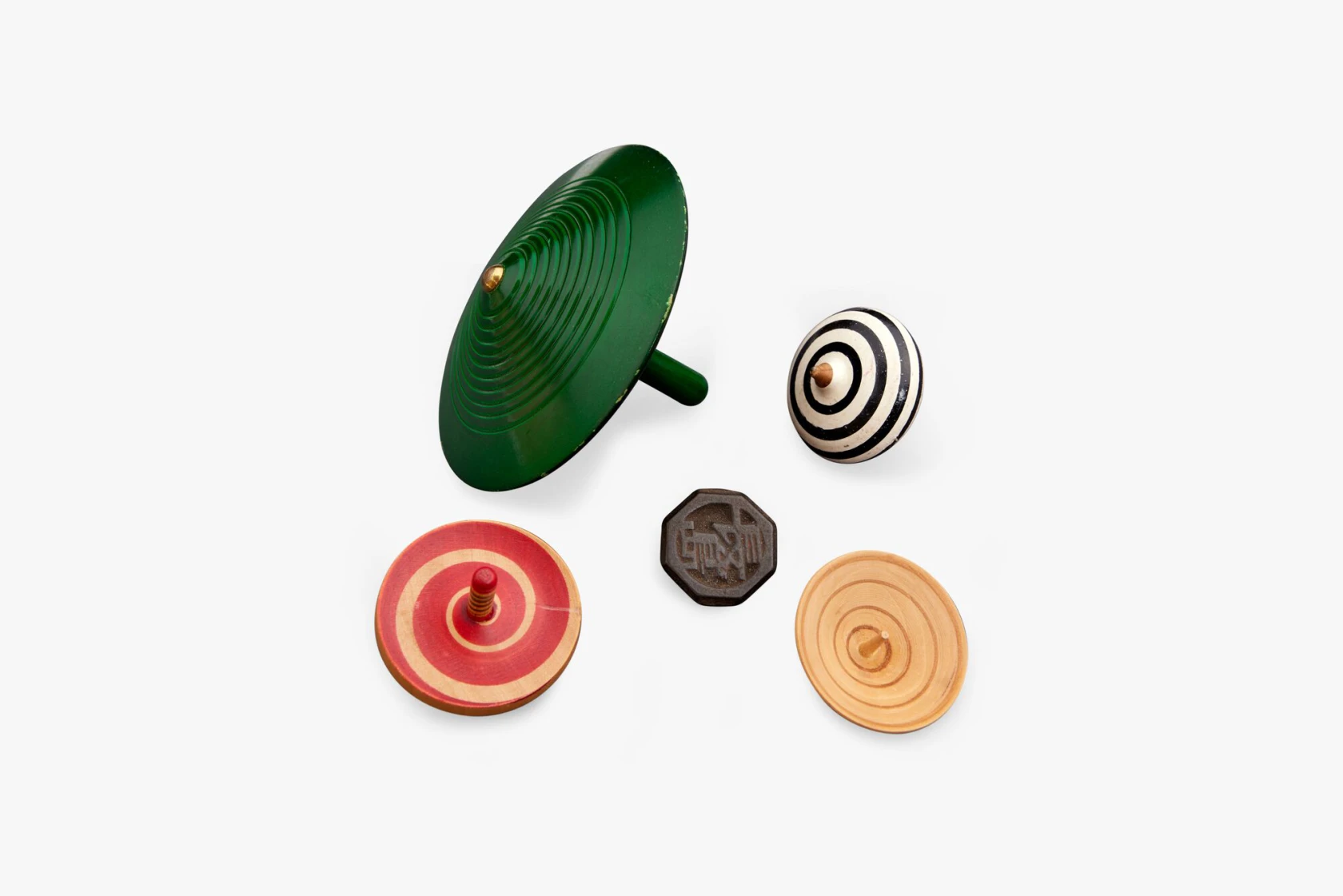
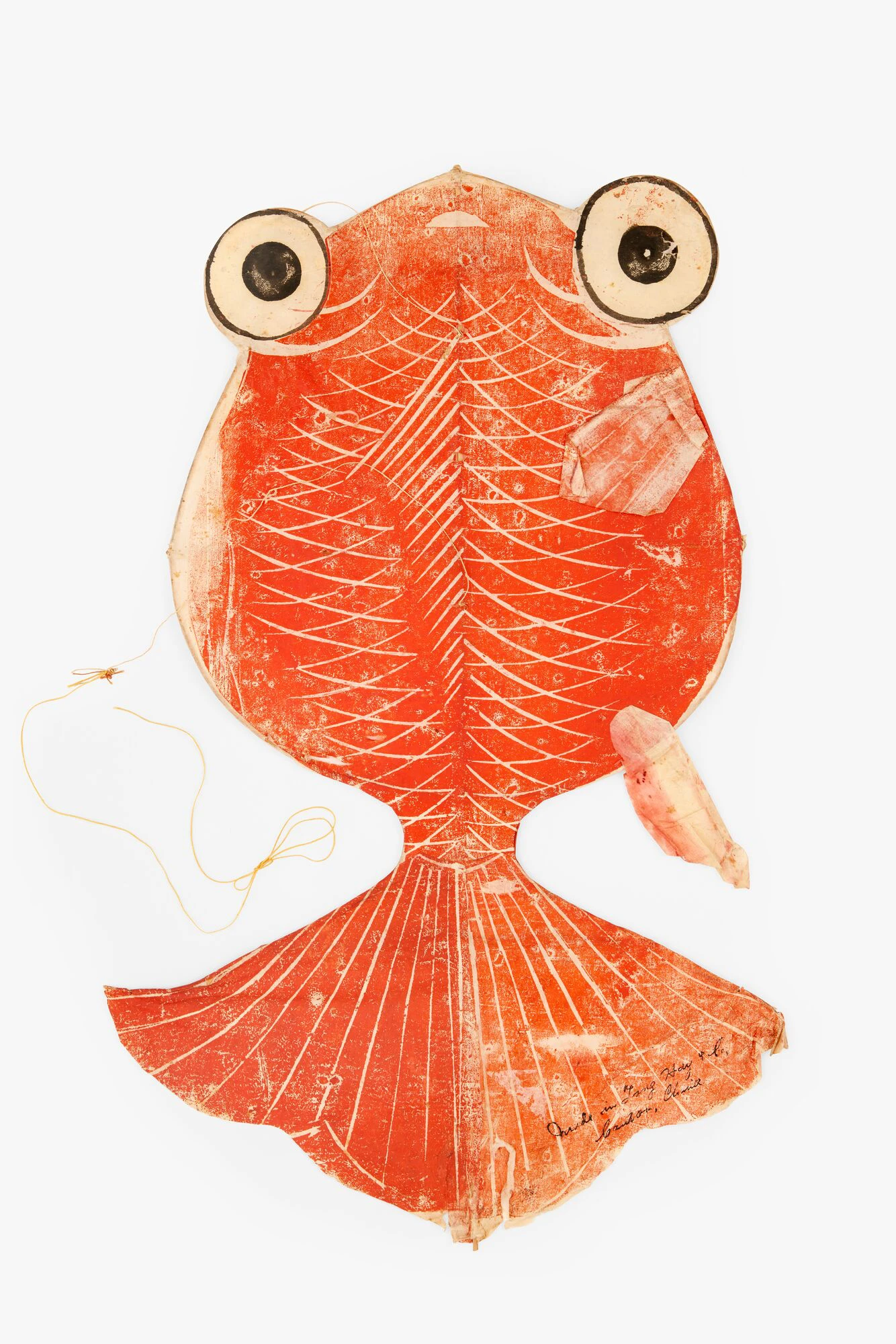
Ray and Charles Eames drew inspiration from many sources. Toys, and kites in particular, played a central role, as they can be found in almost every culture around the world. Images: the Eames Institute.
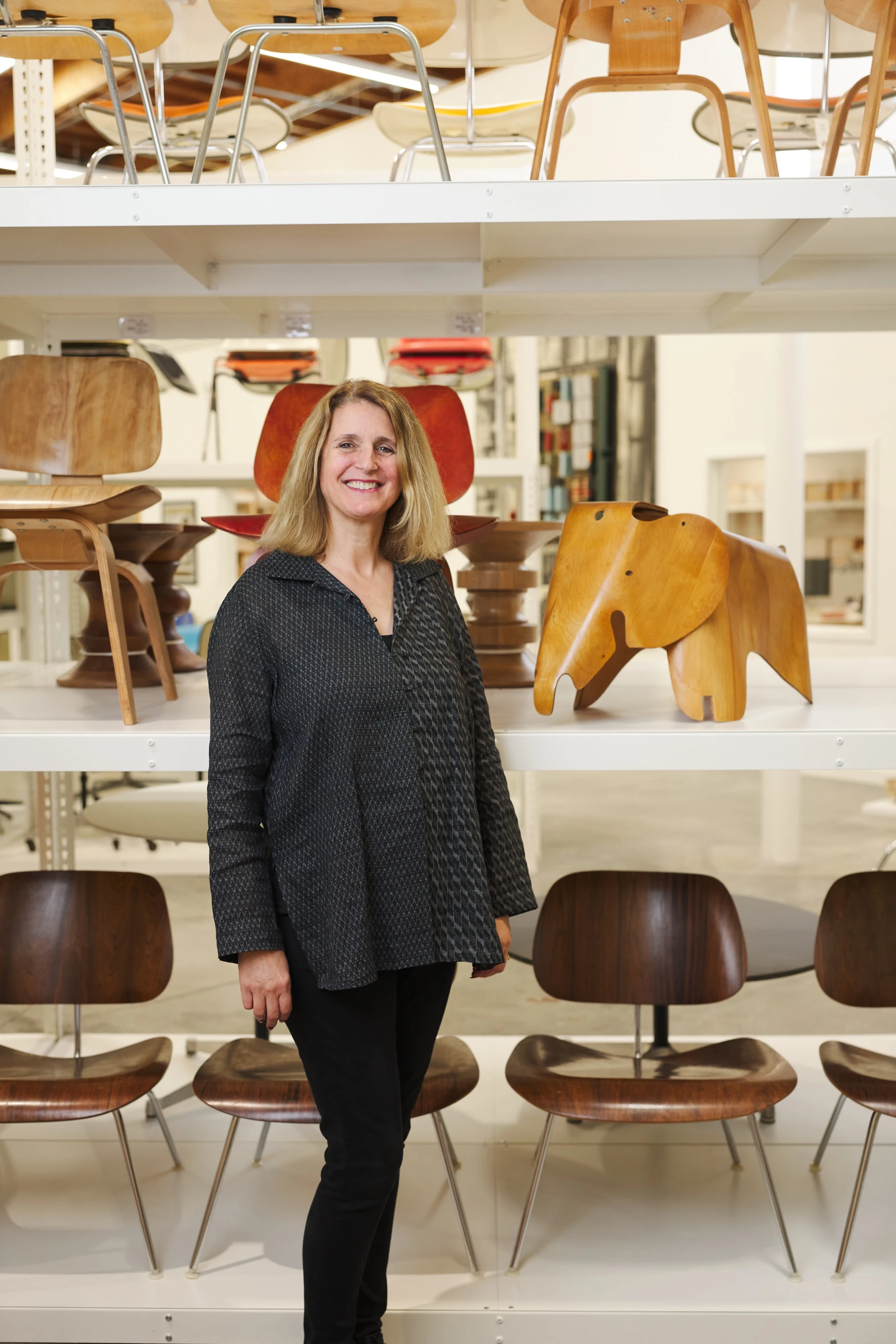
Llisa Demetrios grew up as the granddaughter of two design icons of the twentieth century: Ray and Charles Eames. Today, as Co-Founder and the Lucia Eames Chief Curator of the Eames Institute of Infinite Curiosity (named after her mother, Charles’ daughter Lucia Eames), she carries forward preserving and expanding the legacy of her family. Established in 2020, the nonprofit was founded to make the Eames’ collection accessible to the public. Her long-term ambition is a new museum campus, currently in development, that will present not only finished works by Ray and Charles Eames, but also the processes that shaped them.In this conversation, Demetrios reflects on what she learned from her grandparents, why curiosity matters more than objects, and why the future of the Eames Institute is less about preserving history than inspiring new ways of thinking.
Llisa Demetrios is the granddaughter of Charles Eames and step-granddaughter of Ray Eames. She serves as the Co-Founder and Lucia Eames Chief Curator at the Eames Institute of Infinite Curiosity, which was named after her mother, Lucia. Photo: the Eames Institute
the thing Magazine:
What is your earliest memory of realizing that your grandparents were not just your grandparents, but something like cultural icons?
Llisa Demetrios: My earliest memory of that actually came quite late, when I was in my late teens or early twenties. Charles passed away when I was twelve, in 1978, and Ray passed away in 1988, when I was twenty-two. After Charles died, I started accompanying Ray to talks while I was at Yale, traveling into New York to hear her speak. Seeing these huge audiences, so excited to hear what she had to say, made me realize that this was on a much larger scale than I had understood. Until then, I simply knew them as extraordinary grandparents who shared whatever they were working on. I’m often asked about my earliest memory of spending time with them, and one story always comes to mind. I was about eight years old, and we’d gone out to dinner a few blocks from their office in Venice, California. We had borscht, and I hated it. I love it now, but at the time I didn’t. As we walked back, Charles asked me what I thought of dinner. I told him I didn’t like it very much. Without missing a beat, he asked, “Well, how would you have done it differently? What would you have made with those ingredients?” We started imagining all the different things we could have cooked instead. Then he asked another question: “Why do you think it was borscht?” Together we came up with all kinds of possibilities. Maybe someone had just returned from a trip. Maybe they’d read about it in a magazine. Maybe those were simply the ingredients available at the farmers’ market that day. By the time we got back to the office, I felt completely differently. I realized I could disagree with something, but I also needed to have a better alternative. For me, that wasn’t just a design lesson, it was a life lesson.
the thing Magazine:
He was taking you seriously as a creative person.
LD: Yes. I love that. It’s something I share often because it’s incredibly empowering, and it’s such a wonderful way to approach problem-solving. The story became even more meaningful years later. After I shared it with the docents at the Oakland Museum, one of them came running over to me and said, “Llisa, your story works.” I asked what she meant, and she told me that the next time her grandchildren complained about their salads, she asked them, “How would you do it differently?” Instead of becoming a tense moment at the dinner table, it opened up a conversation. That’s really what we’re trying to convey here: to look at things differently and to open doors to new conversations.
the thing Magazine:
Looking back today, are there aspects of the way Ray and Charles worked or lived that you view more critically? Or perhaps the way their legacy is treated?
LD: Actually, I don’t think of it in terms of being critical. Even after working with the collection my mother, Lucia Eames, inherited for so many decades, I still keep learning from them. It’s more a feeling of, “Wow, that’s how they solved that problem.” As we continue making connections between different projects, we discover what they always called “chain reactions.” Their thinking was very elliptical, and I’m still getting my arms around it after all these years.
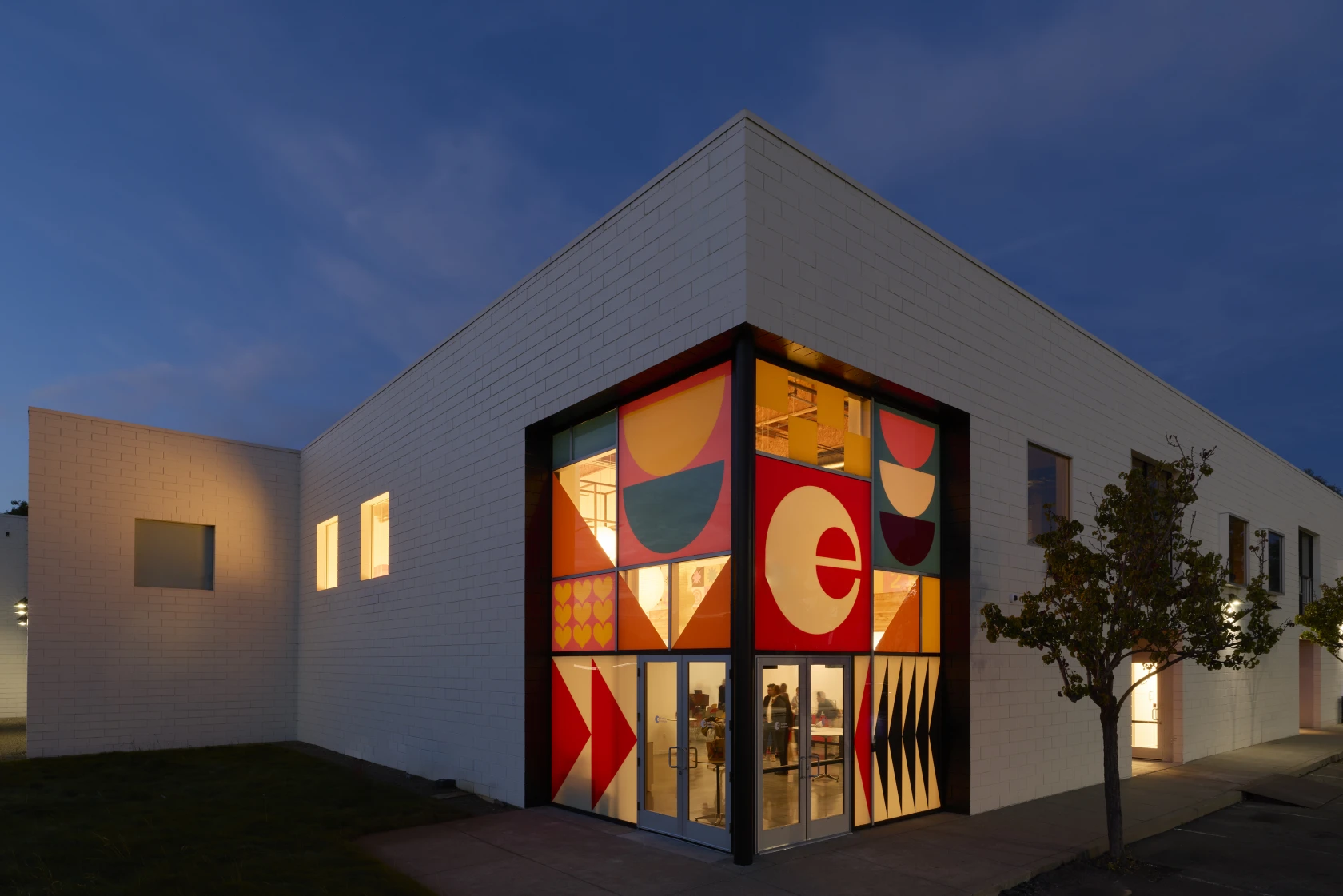
Entrance to the Eames Institute of Infinite Curiosity. Photo: Eames Institute.
the thing Magazine:
So nothing to comment on?
Llisa Demetrios: Ray painted but Charles didn’t. In fact, we have beautiful paintings by Charles and beautiful paintings by Ray. We even created an online exhibition, “Before They Were the Eameses,” which shows just how extraordinarily talented they both were before they ever worked together. Charles himself used to say, “Everything I can do, Ray can do better.” When they met, Ray was actually the more established figure, having co-founded the American Abstract Artists in 1936. What I love is bridging those gaps rather than reinforcing them, helping people understand how extraordinary they both were.
the thing Magazine:
A few weeks ago, someone told me about an encounter with Dieter Rams. They were a design student at the time, and Rams joined one of their university courses as a guest. During the discussion, someone asked Rams what young designers today could do to make a meaningful contribution. His answer was surprisingly honest: the conditions are completely different now, and a career like his simply isn’t possible anymore. We still celebrate figures like Dieter Rams or Ray and Charles Eames, but what can young designers actually learn from them today?
Llisa Demetrios: It’s a great question because, for me, it’s not what they designed, it’s how they designed. That’s the more important question. Sometimes I ask myself whether Ray and Charles would even be designing chairs today. They might be designing something completely different. What mattered to them wasn’t the object; it was the process. Growing up, they always encouraged us to get on with life. Go read. Go for a walk. Ride a bike. Have primary experiences, because those are what inform you. They also believed that you don’t have to go to art school to be an artist, and that you’re designing something even when you’re setting the table. What would matter today is that they would apply their design process to whatever problems exist now. It always began with identifying the need.
the thing Magazine:
How would this method be applied in practice?
Llisa Demetrios: There’s a story about Budweiser asking Ray and Charles to redesign the label on their beer bottle. They looked at it for a few months and then gave it back, saying it was already doing everything it needed to do. Even when someone thought they knew what the problem was, Ray and Charles would first ask what was needed. I have children in their twenties, and they’ve said that the jobs they’ll have probably don’t even exist yet. But what they will have are tools. That’s what we’re trying to share here: the tools Ray and Charles used. We want people to leave with more tools in their own toolkit.
Ray and Charles Eames drew inspiration from many sources. Toys, and kites in particular, played a central role, as they can be found in almost every culture around the world. Images: the Eames Institute.
the thing Magazine:
What would you say are the main takeaways from the way Ray and Charles worked?
Llisa Demetrios: For me, it is the understanding of design as a method of action. It’s a way to improve the world. It’s about working within constraints, not compromising, but working within constraints. It’s really a philosophy of problem-solving. There are so many challenges today, and everything feels incredibly complex. But when you begin to see how one thing connects to another, you can start to unravel a problem and understand where a solution might lie. Ray came from painting. Charles came from architecture. Together they used design to solve problems, both personally and professionally, from creating a house that allowed them to have a meadow next to the house, to designing a leg splint during the war that could be produced efficiently and help the war effort without harming anyone.
the thing Magazine:
How does this understanding translate into your current work?
Llisa Demetrios: One of my favorite moments during our tours at the Institute is when people suddenly have that “aha” moment and say, “Now I get it!” My hope is that they take that way of thinking back into their own work. It’s not about compromising. It’s about working within constraints and addressing real needs.
“What mattered to them wasn’t the object; it was the process.”
the thing Magazine:
The Eames Institute is currently working toward one of its most ambitious projects yet: a future Museum. Could you tell me more about the vision behind it?
Llisa Demetrios: We’re planning to open the future Museum in 2030. What’s been exciting is that, together with our CEO, John Cary, we’ve been thinking about scaling up slowly. Right now, we’re testing ideas here in Richmond, what kinds of tours we can give and how we can share this material in different ways. The Future Museum is going to be about much more than finished objects. We want to immerse people in the process of design. There will be not only my grandparents’ work, but also world-class artists alongside emerging practitioners. We want the spaces to be flexible and nimble, allowing us to present different ways of thinking and making. We’re very fortunate to be working with the architecture office Herzog & de Meuron. They’re extraordinary, not only when designing museums from the ground up, but also in repurposing existing buildings. We’ve visited cultural institutions like M+ in Hong Kong to understand what a museum of the future can be and what our own needs are. Ultimately, it’s about encouraging people to ask more questions, to spark their curiosity, to think about sustainability, and to connect ideas in new ways. We hope visitors will be able to spend an hour—or an entire day—there. The museum will include both indoor and outdoor spaces across an eighty-acre site, with pathways where people can spend time. Also will include the work of world class artists and emerging artists. It will be accessible by train and designed for all ages. Our hope is that it becomes a landmark in the very best sense of the word.
the thing Magazine:
Do you ever get tired of talking about your grandparents?
Llisa Demetrios: Never. What’s so exciting is that I get so many different questions. Every tour and conversation is different because people are curious about different things. As my colleagues know, I love being asked questions. Some visitors already know a great deal about Ray and Charles, while others know almost nothing. The wonderful thing is that everyone takes something away from the experience. I adapt each tour to the questions people bring, because this is a moment where we can explore those ideas together. If I were in their position, I’d be just as curious

Join our community to post comments.
Login
Create account
Recent Comments
No comments yet.