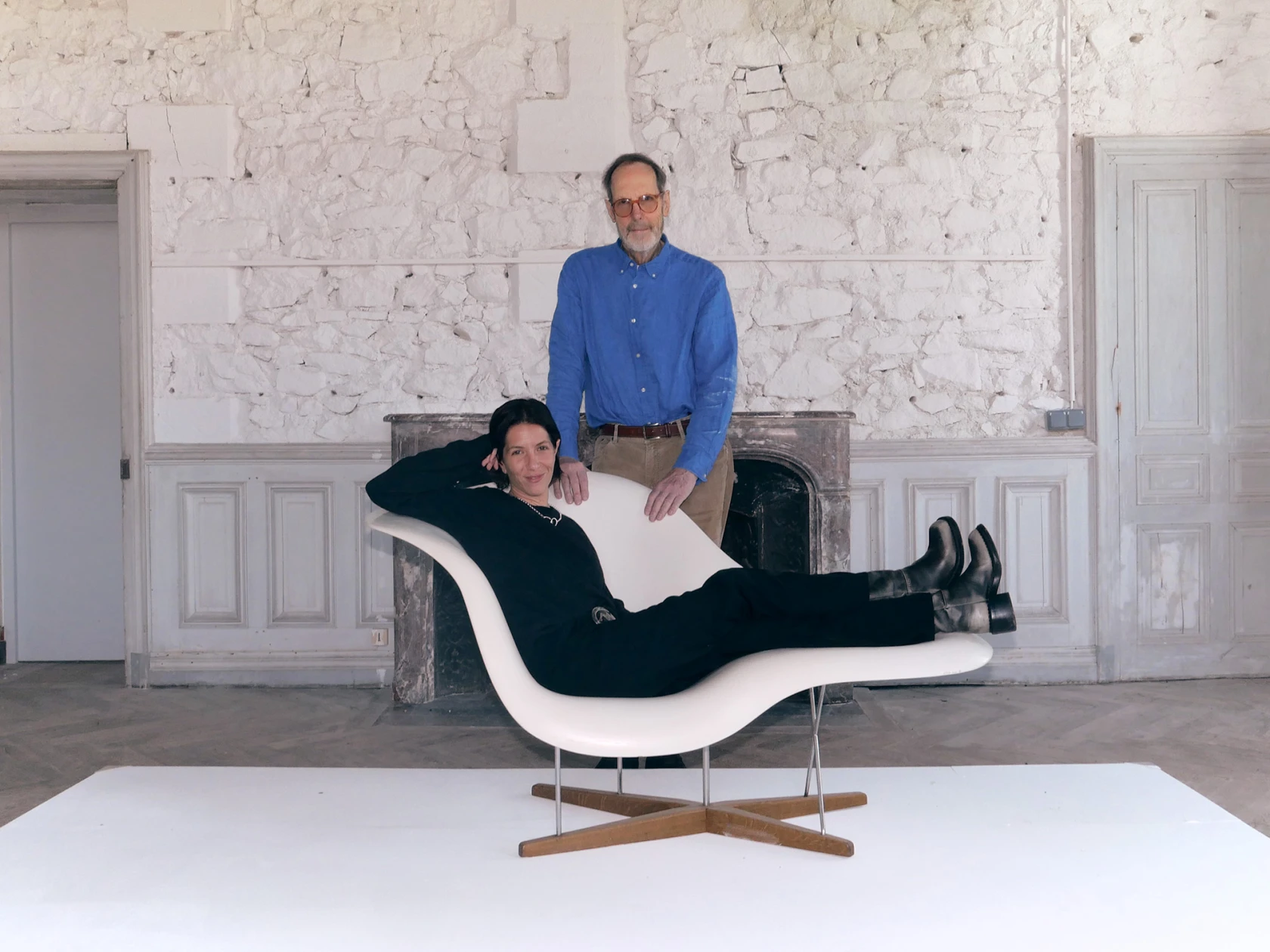
Curiosity about human expression and belief systems, and how these are connected to objects, is a recurring theme throughout Alexander von Vegesack’s life.
Sofia Alazraki’s career has rarely followed a straight line. Born in Argentina, she studied art history and painting before moving into furniture design and eventually establishing herself as a set designer and artist based in Madrid. Both her commercial and personal work revolve around objects, as she puts it, arranging them into scenographic compositions that sit somewhere between chain-reaction machines, still lifes and a very tasteful flea-market booth. So when she was invited to host a workshop at Domaine de Boisbuchet, a renowned design summer school in France, it seemed like a natural extension of her multifaceted practice. She didn’t know that the visit would open up yet another path in her career.
Following long conversations with both Boisbuchet’s founder, Alexander von Vegesack, and his partner, curator Mathias Schwartz-Clauss, she was eventually invited to curate the annual exhibition at Boisbuchet. Given carte blanche, Alazraki chose to turn her attention to Alexander himself.
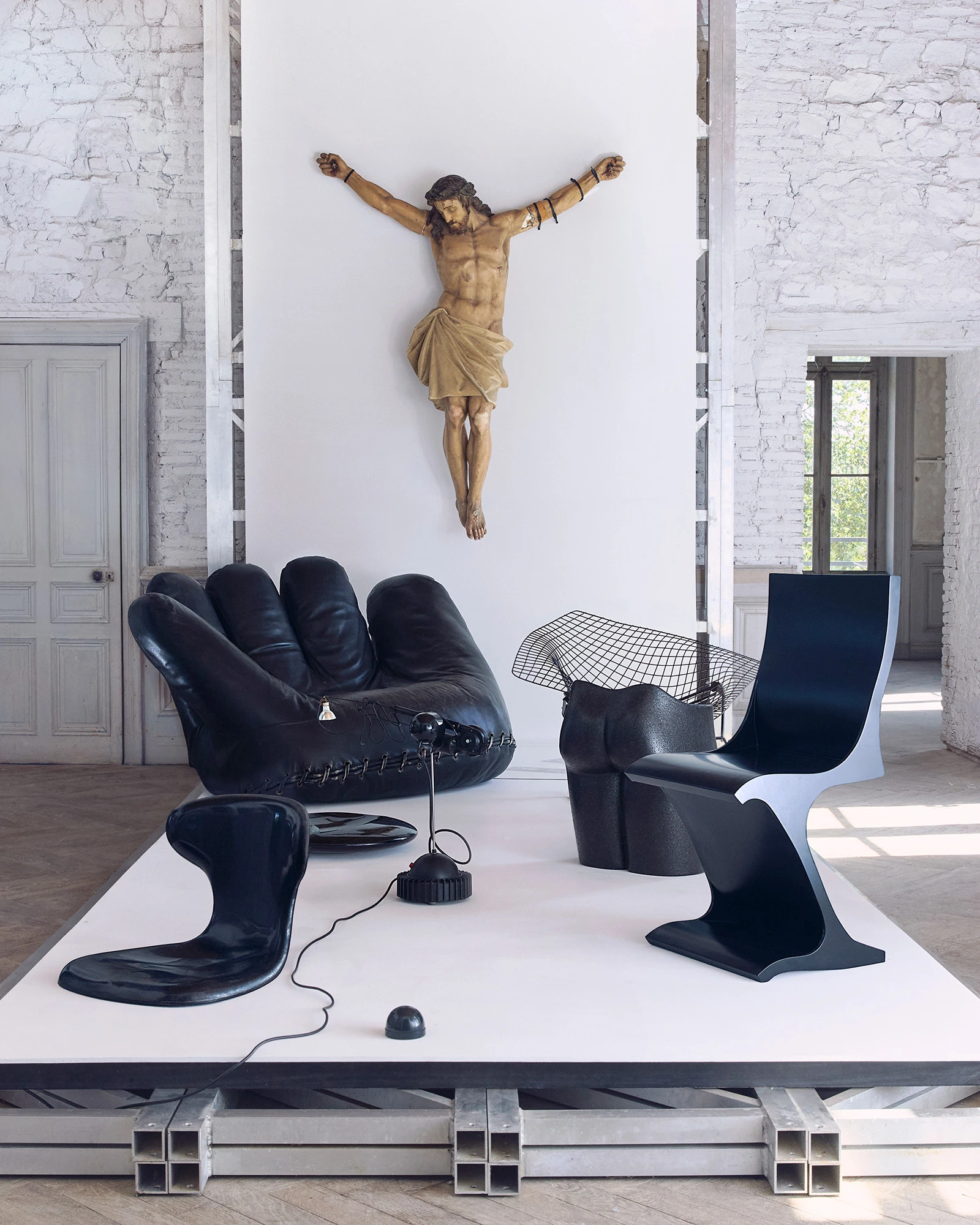
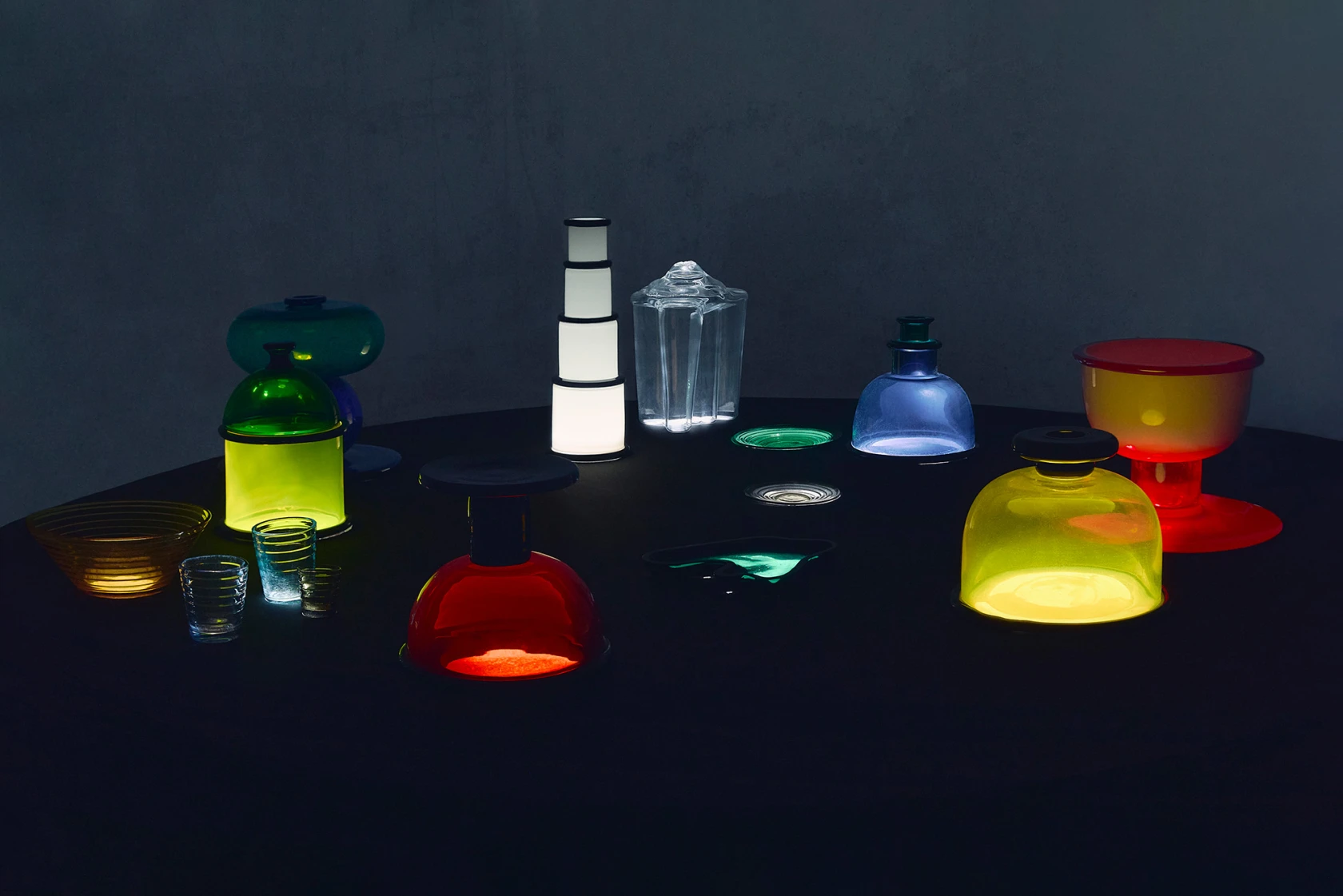
The result, “Conversation Pieces,” presented throughout the domaine’s neo-Baroque château, is not a chronological retelling of von Vegesack’s biography—a life that spans from founding the Vitra Design Museum to an enduring fascination with horses and creative community-building—but rather a theatre of objects unfolding across different stages.
We met with Alazraki virtually to talk about breakfasts as a method of exhibition-making, how her own practice informed the show’s scenography, and why she found something surprisingly familiar in von Vegesack’s nonlinear life.
Curiosity about human expression and belief systems, and how these are connected to objects, is a recurring theme throughout Alexander von Vegesack’s life.
As founding director of the Vitra Design Museum, Alexander von Vegesack worked from an improvised office in the factory’s cellar, surrounded by books and papers as he planned exhibitions and their journeys around the world.
the thing Magazine:
A life can be long and diverse. On top of that, Alexander von Vegesack owns one of the most extraordinary collections of design and everyday objects in the world. How did you find the red thread that would guide your curation?
Sofia Alazraki: I spent a lot of time speaking with Alexander, and his life just felt so punk rock to me. He left school at 13 and never went back. At one point he was living with the Amish and making carriages; then suddenly he had a club in Hamburg, called the Fucktory, where eight people and a goat were living. There was this constant sense of doing something without necessarily speculating about what the next move should be. One thing simply led to another. I thought it was such a good story to tell, especially to younger people who feel that the only way into art or design is to do 500 internships and work for free for years before maybe getting a junior position somewhere. Alexander’s story was completely different. It was the story of a hustler, of someone taking a path that wasn’t particularly linear.
the thing Magazine:
So the nonlinear, punk-rock character of Alexander’s life became a central perspective in the exhibition. How did you identify the aspects of his life that expressed it best?
SA: It started with really long breakfasts. I can drink 200 litres of mate, so we would sit there for hours and talk. I started gathering anecdotes, conversations and details that could build a character. Then we went through the collection, which is endless. Eventually I reached the point where I thought: I physically cannot look at anything else. I’m just going to work with what I have seen. From there, I decided which stories I wanted to tell and selected the objects and started drawing. The whole exhibition was conceived in a very Deleuzian way: it doesn’t really have a beginning or an end, and there isn’t one correct direction in which you have to see it. For me, the exhibition works almost like a theatre play in which the objects become the actors. It’s as if you took a photograph of a scene and all these objects were the characters within it.
“Eventually I reached the point where I thought: I physically cannot look at anything else. I’m just going to work with what I have seen.”
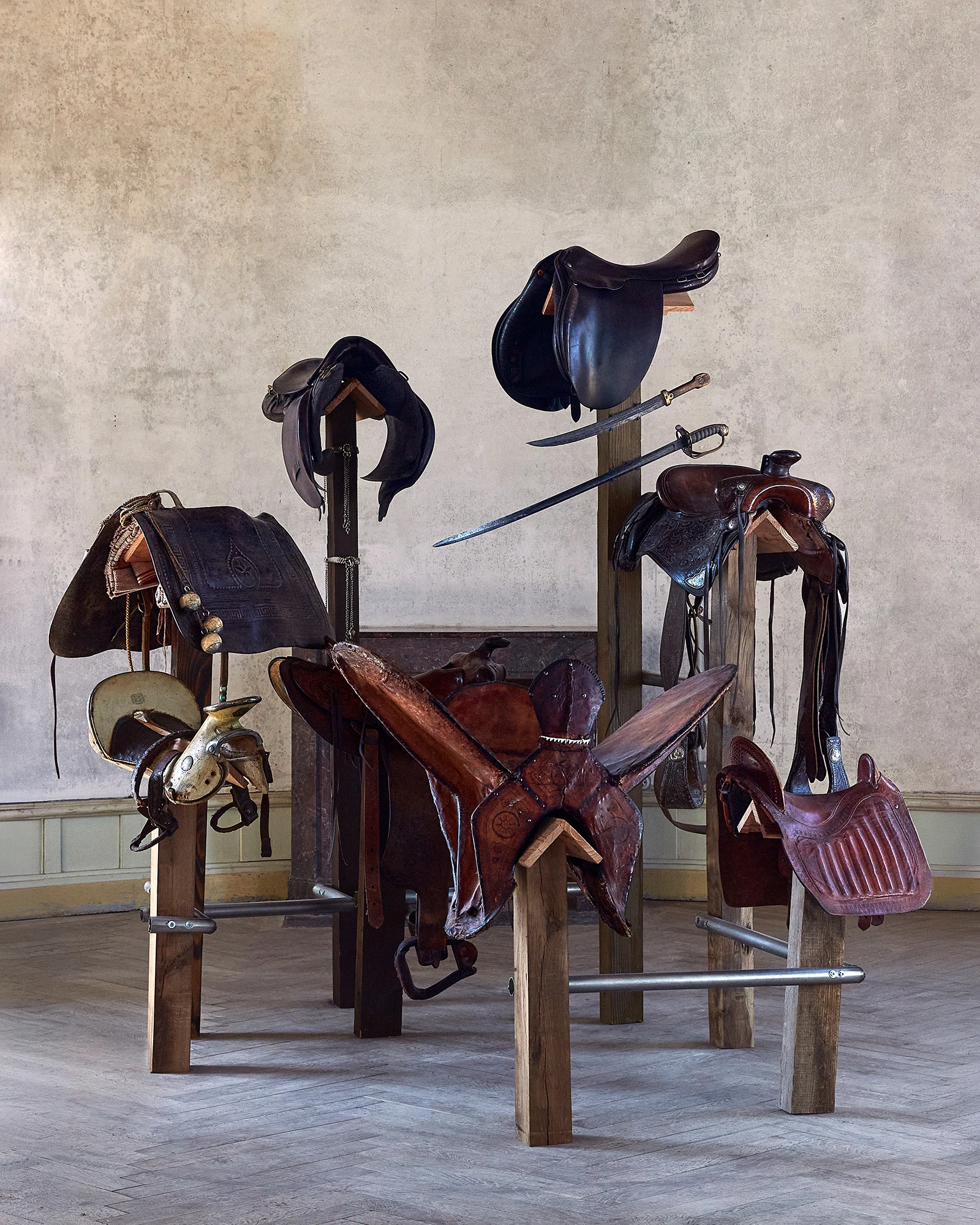
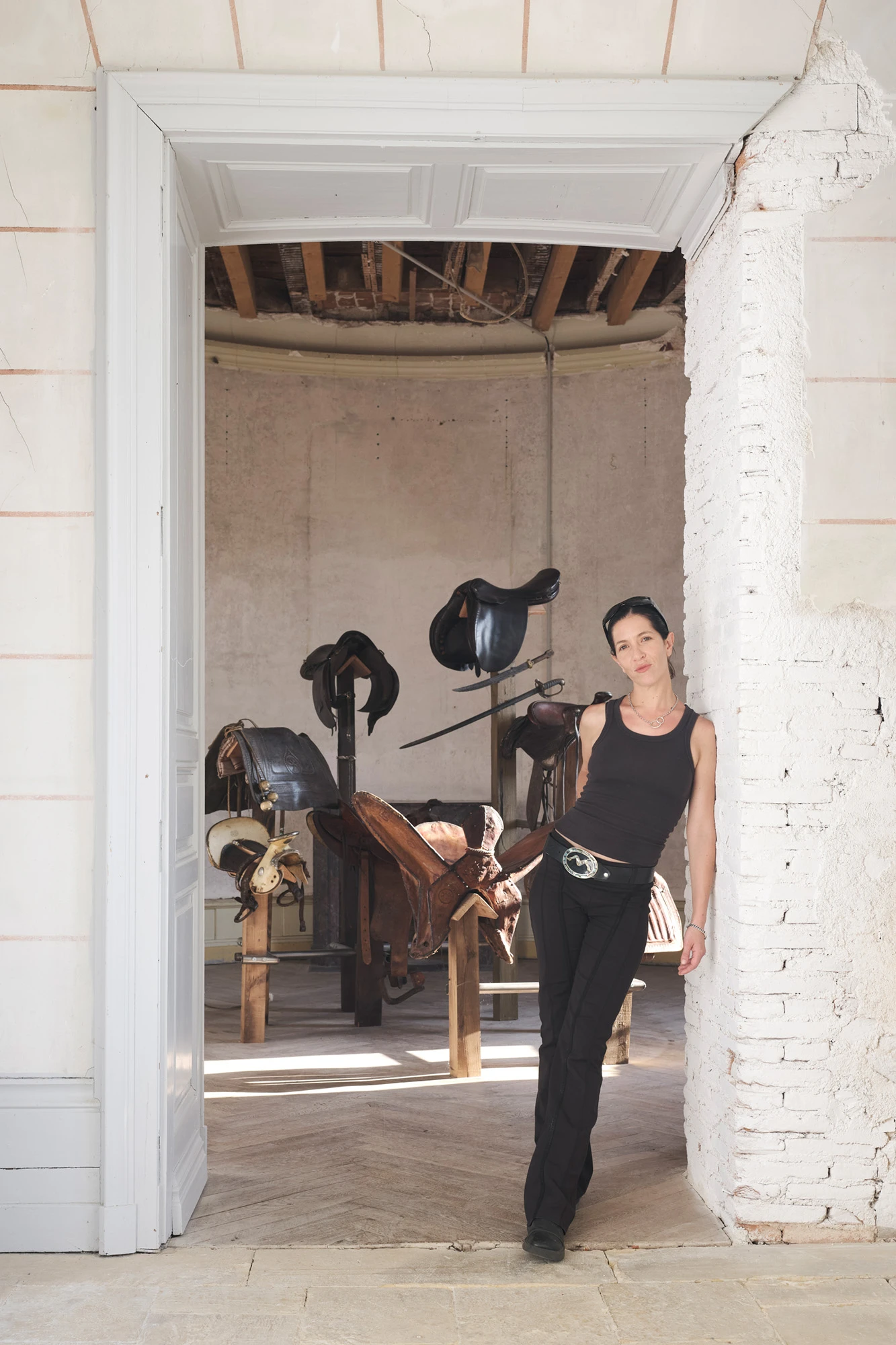
SA: The first “scene” has all these horse saddles arranged in a circle surrounded by a moving lasso. For me, that room was about toxic masculinity and this mythology of the lone rider. Alexander told me that when he was around six, his father put him on a horse, hit the horse and basically said: off you go. It’s this idea of how a man is supposedly built. I wanted that to establish the context from which this sensitive, strange character eventually emerges. Another recurring theme in our conversations was balance. Alexander would constantly say that balance is the most important thing. And I think that appears throughout his life: being punk enough, but also institutional enough. There are all these contradictions within him.
Can you give an example of how that works within one of the rooms?:
The exhibition doesn’t read like a conventional biography at all.
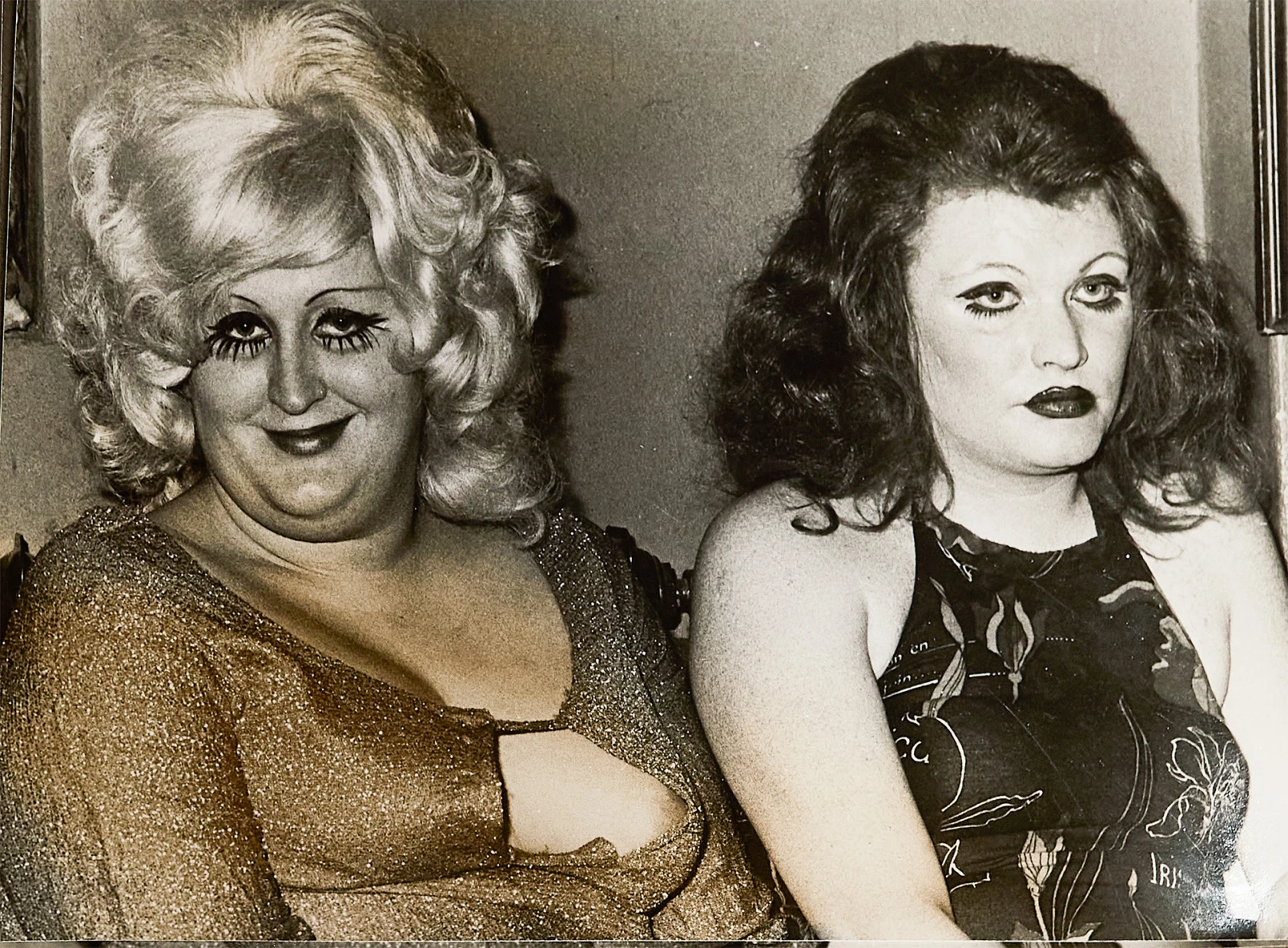
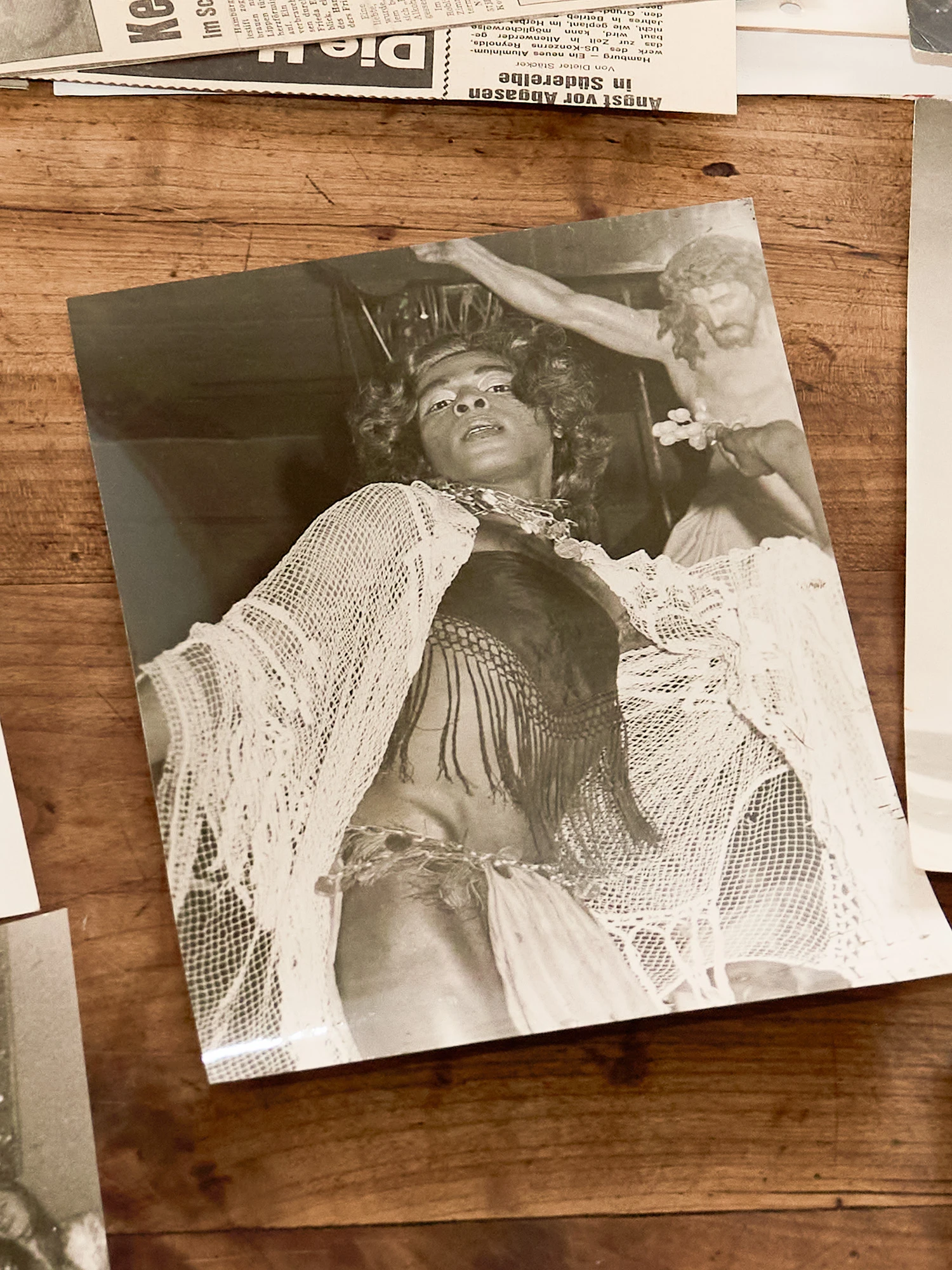
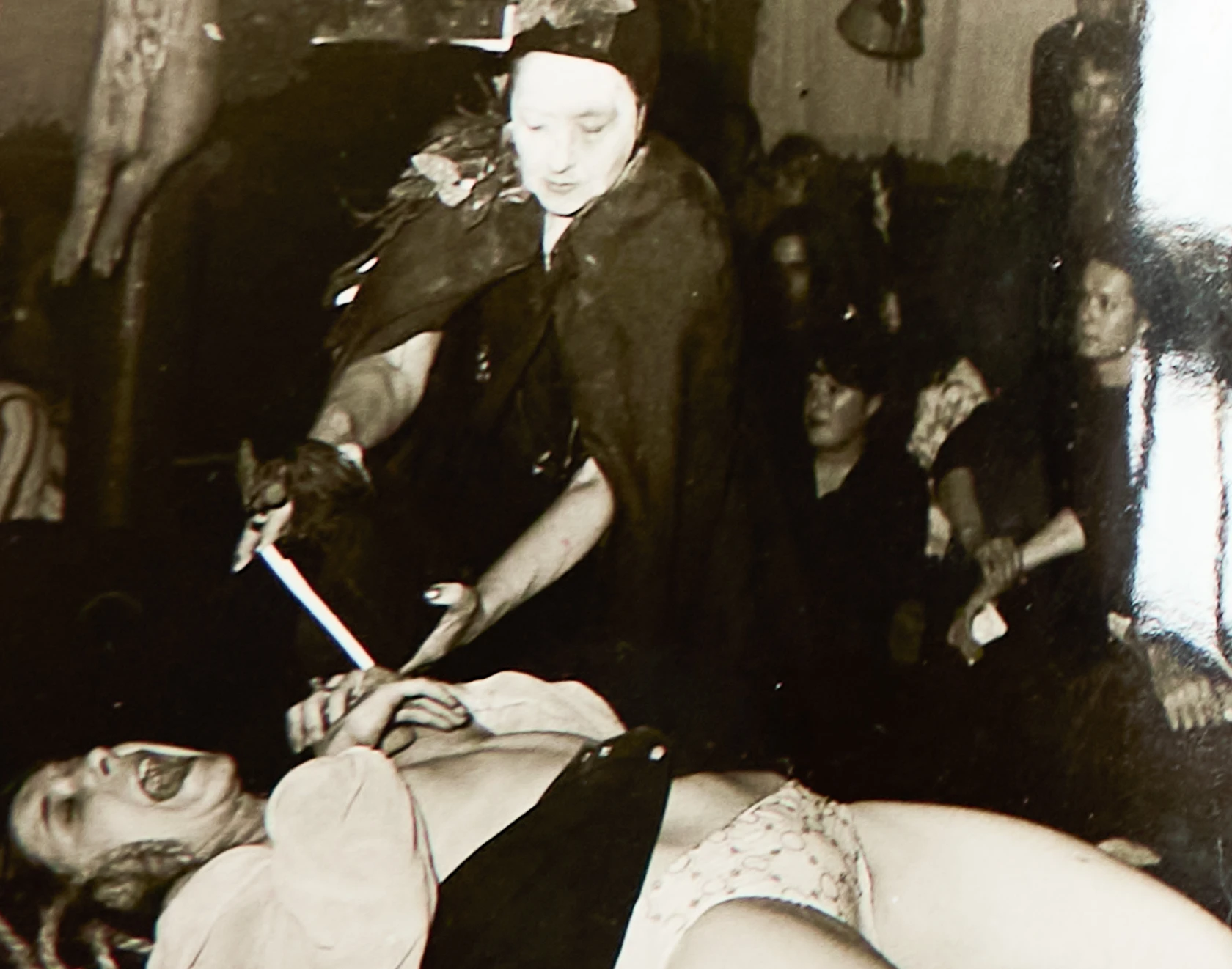
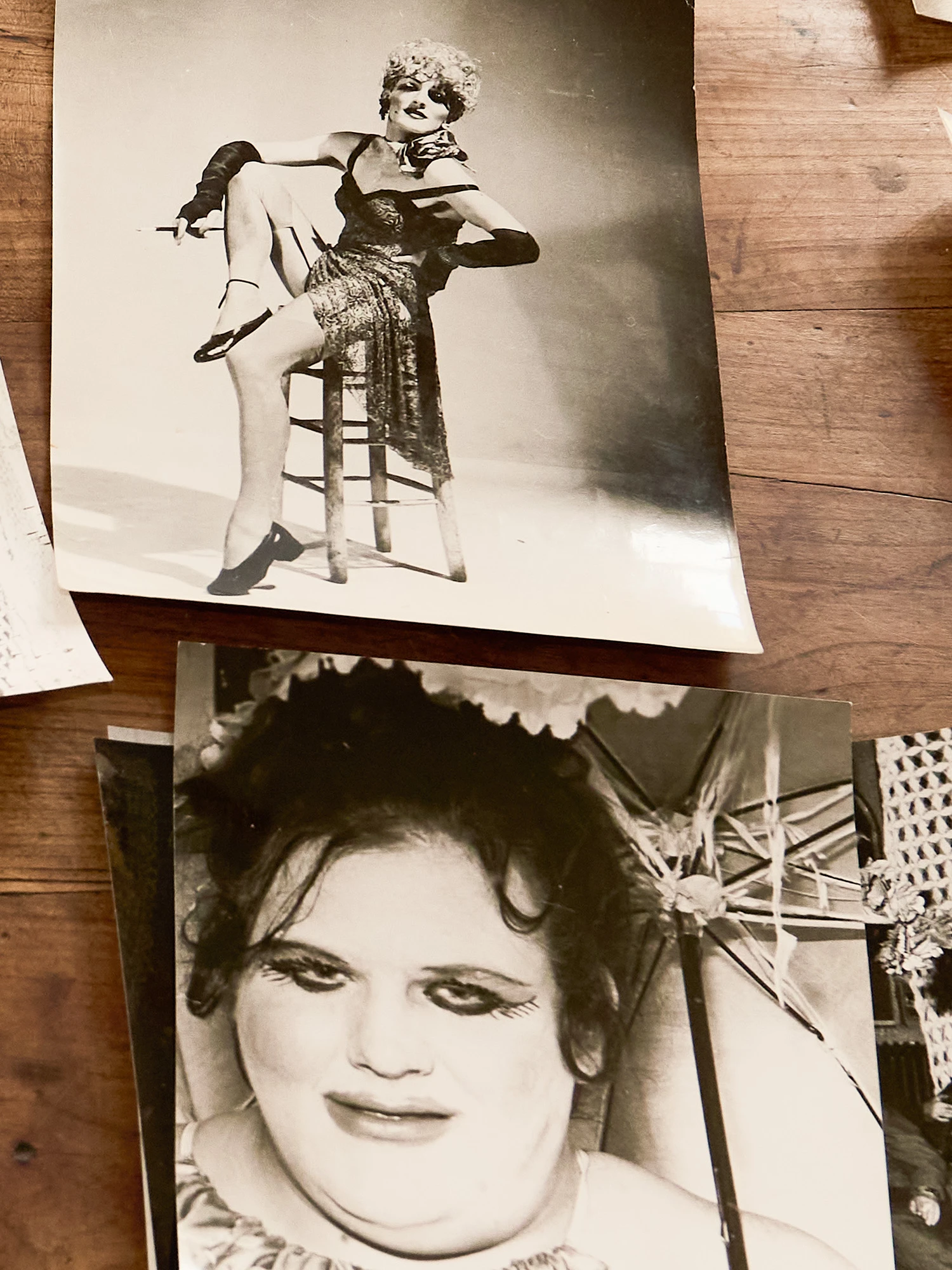
That was very important to me. When you have breakfast with somebody, you don’t tell stories chronologically. You move from one subject to another, then something reminds you of something else. It’s conversational. That became the structure of the exhibition. Each room is like a chapter or scene, and I chose the objects that could be the best actors for that particular scene. The Fucktory room, for example, is all about the weirdos—the outspokenly different ones. For me, the photographs of the Fucktory are among the most important things in the exhibition because suddenly you realise: this actually happened. There are all these unbelievable stories, and sometimes you wonder whether they have grown into “big fish” stories over time. But then you see the photographs and think: fuck, no, this actually happened.
Before Boisbuchet, there was Fucktory: an underground cultural space and refuge for experimental artists, designers, musicians and queer creatives.
Eight people from different countries lived and worked at Fucktory, transforming their shared home into a public cultural venue on weekends.
For the Fucktory happening “Black Mass,“ crucified pigs, performers and fake rats created a spectacle whose ensuing scandal reportedly reached the Vatican.
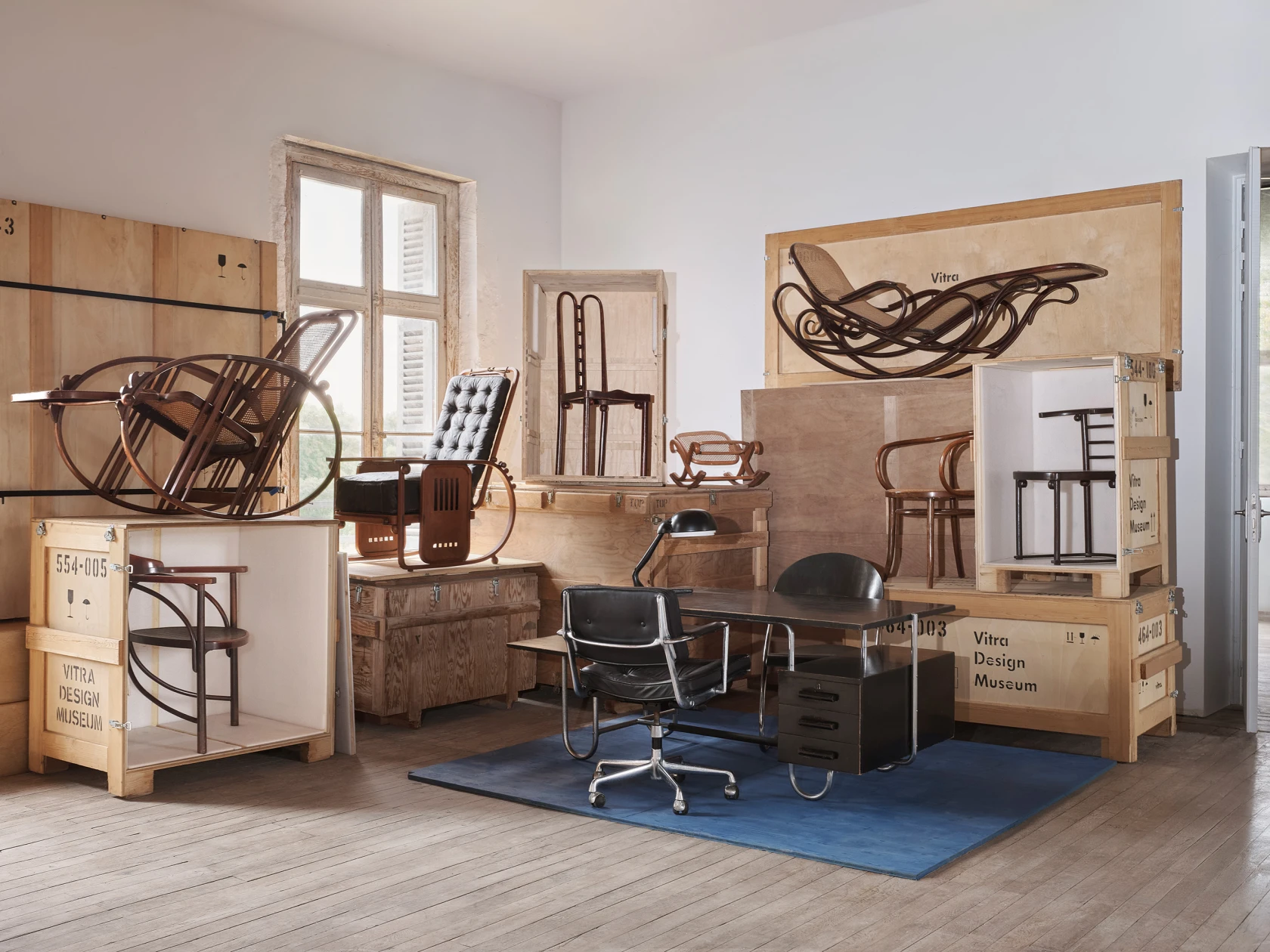
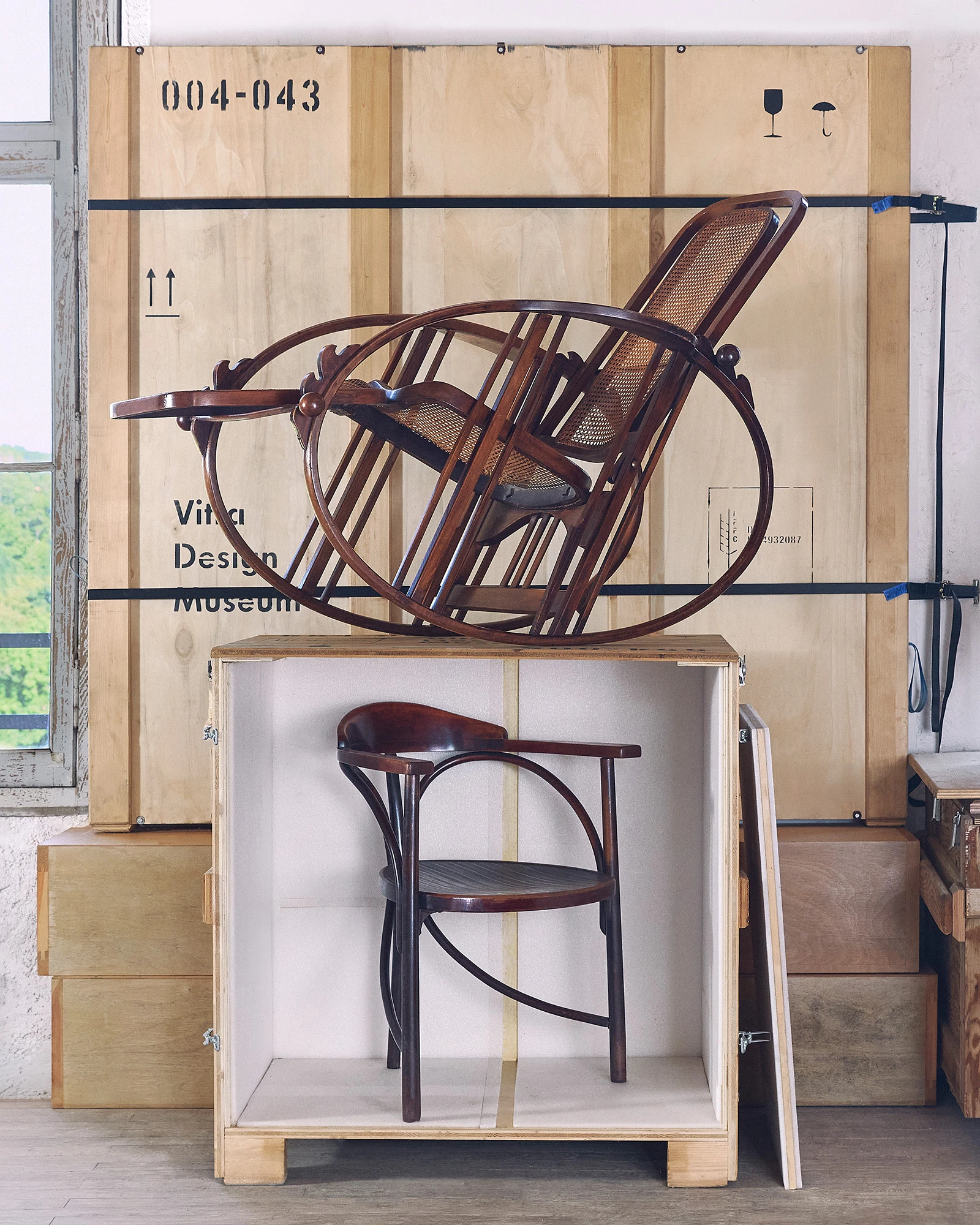
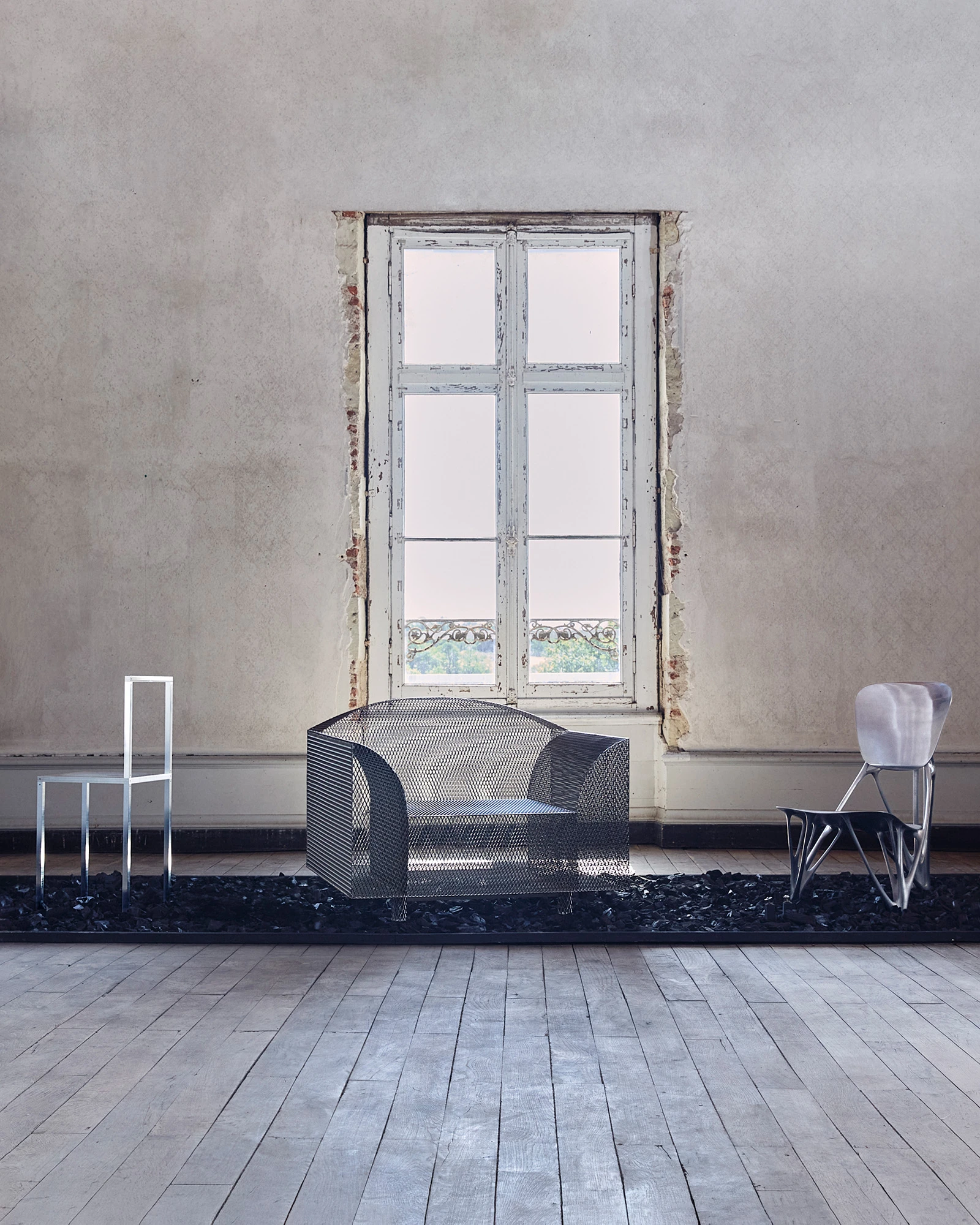
The second-hand bentwood chairs used at Fucktory sparked Alexander’s fascination with their flexible construction and intelligent industrial design.
the thing Magazine:
How did you then create the scenography around those objects? Is it intuitive, or are you composing everything very precisely?
SA: I think by now I do some of it on autopilot. I’m terrible at sketching; probably only my building team can understand my drawings. But I always start with the object. What is its shape? What is the story I’m trying to tell with it? That already gives the object an intention and an action. Something fixed firmly to the ground says something completely different from something light that moves through the air. Then there is the relationship between objects. A horse saddle next to a sword means something entirely different from a horse saddle next to a dildo. The object itself might be identical, but its meaning changes completely through context. That way of thinking probably comes from working as a set designer for so long. My thing is objects. Whether it’s a shoe, a bag, a phone, headphones or a car, what I do is show objects.
the thing Magazine:
Boisbuchet is far out in the countryside, quite the opposite of a well-equipped museum or studio. This must have presented some very specific constraints.
Completely. Every time you need something, it’s an hour away. You have to work with what is there. But limitations are part of the design for me. I love being able to do something with what I have. If you embrace that as a game, it becomes really fun: okay, these are the things I have, now what can I make from them? What was unusual here was that I normally don’t know exactly what I’m building until I have the objects in front of me and can play with them. At Boisbuchet, some of the pieces only arrived on the final day. Everything had to be constructed beforehand, and even the texts were already printed. There was very little room to go back.
“A horse saddle next to a sword means something entirely different from a horse saddle next to a dildo. The object itself might be identical, but its meaning changes completely through context.”
the thing Magazine:
Did you ever question or doubt yourself during the process?
Alexander and Matthias constantly reminded me that I had been invited as an artist-curator. Whenever I wondered whether something was too much or too risky, they said: just do it. Essentially, they invited me to make my sculptures and installations using their material.
Alexander’s lifelong fascination with horses and saddles began in childhood. For him, the saddle became more than a means of mobility: an interface between human and animal, embodying intimacy and dependence as much as control.
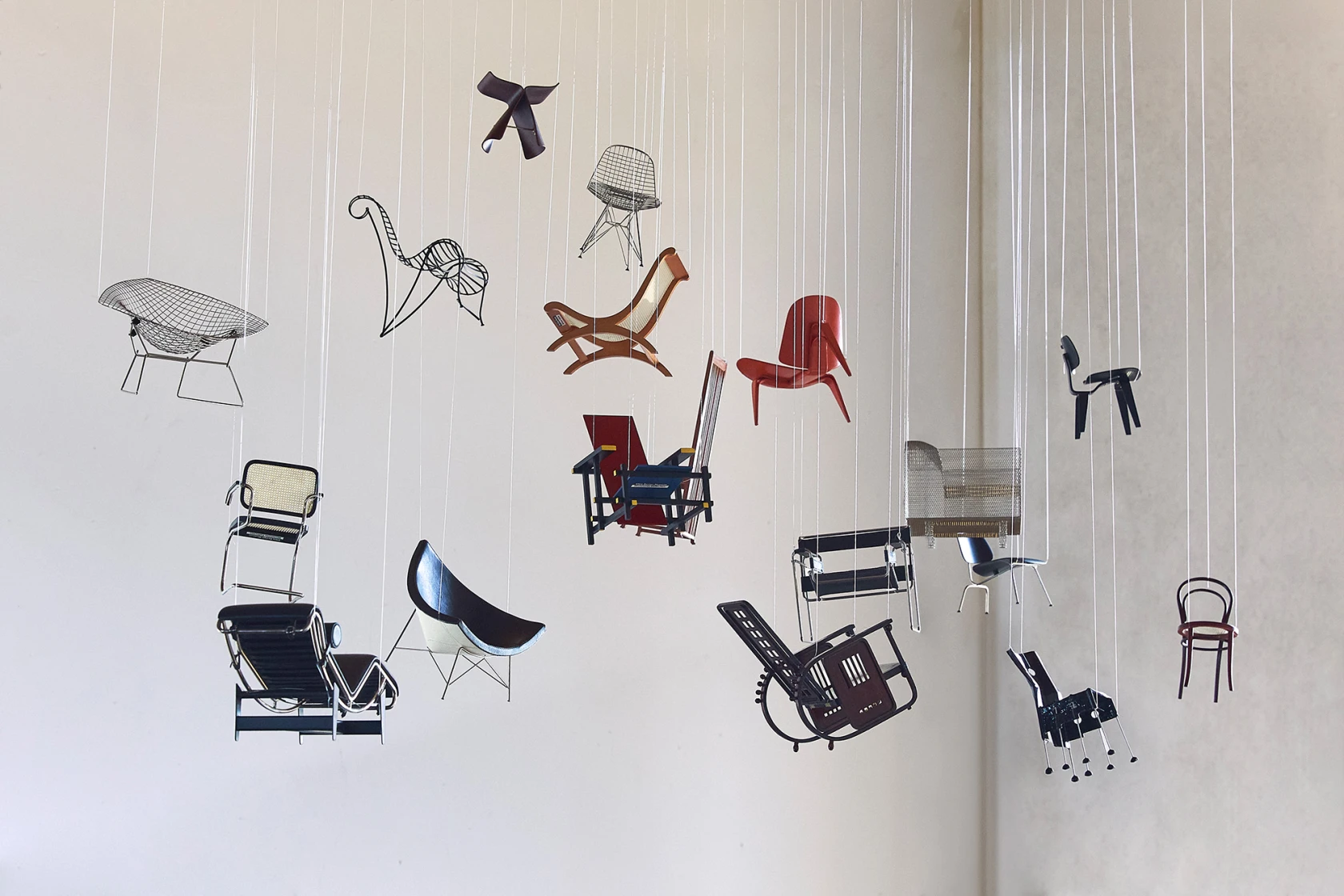
As the Vitra Design Museum grew, Alexander von Vegesack continued to rethink how it could operate. Inspired by miniature furniture once used by travelling salesmen, he introduced the museum’s miniature chair editions as both collectibles and a source of income.
Von Vegesack was among the earliest collectors of Thonet bentwood furniture. To help finance the founding of Boisbuchet, he sold half of his collection to Vienna’s MAK.
the thing Magazine:
Looking at your own career, it makes sense that you would connect to Alexander’s nonlinear biography. Your practice has also moved through very different fields.
I initially studied art history and was devoted to painting. But when I started selling paintings, I realised it was too personal for me. The idea of producing a one-of-one object and then selling it to somebody I maybe didn’t even like was difficult. So I moved into furniture, despite knowing basically nothing about it. Eventually I went to Barcelona to study furniture design. I eventually realised I wasn’t necessarily the best furniture designer, but I was much better at selecting things, arranging them and shopping for objects. That led me into set design.
the thing Magazine:
And set design became your commercial career, particularly in fashion?
Yes. I moved to Madrid around seven years ago, and Madrid has been very kind to me. I started doing a lot of fashion work, which I love because it has this playfulness and speed. It’s taken seriously, but not too seriously. Something has to happen quickly, within a certain budget, and then it’s gone. At the same time, I never stopped doing my personal work. A couple of years ago I had my first big solo show in Buenos Aires, and since then that side of my practice has grown. I think it’s really important to take your pleasure seriously—to take the things you make without anybody asking you to make them seriously. Today, my commercial work and personal work constantly feed each other. I often use leftovers from commercial productions in my exhibitions. There is so much waste in that industry, so you might as well reuse it. And knowing you may use something again also pushes you to make commercial work that you actually like.
the thing Magazine:
In that sense, does “Conversation Pieces” feel like another direction emerging from everything you were already doing?
Exactly. I hope this exhibition opens another tab. It’s the same thing I’ve been doing, just with a different object. And I think that’s also why I connected so much with Alexander. I’ve always had to work a lot and had thousands of different jobs. There’s something magical to me about not following a predictable path—about being curious, moving from one place to another, and trusting that if you really give yourself to it, it will take you somewhere.
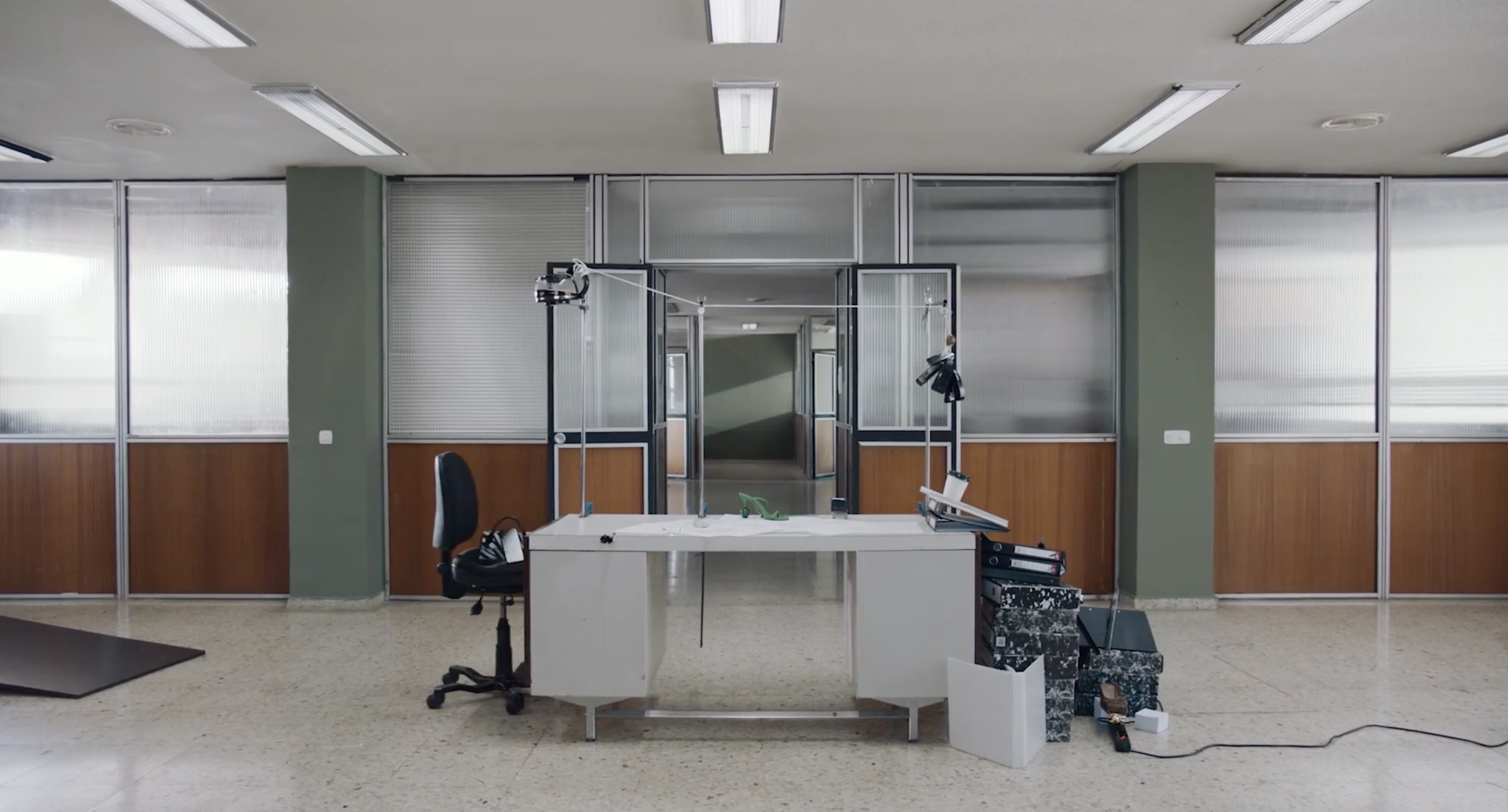
“My commercial fashion projects and personal sculptures feed off each other constantly,” says Sofia Alazraki. While she has worked for global brands, her sets often feel less like commercial productions than personal installations, as in this office video series for French fashion house Jacquemus.
The exhibition ran at Domaine de Boisbuchet until 20 September. While every exhibition is best experienced in person, we created this feature to extend the project, and the work and creativity that went into it, beyond its physical run and into the virtual realm.
Sofia Alazraki in “Conversation Pieces”, her exhibition exploring the punk-rock life of cultural entrepreneur and Domaine de Boisbuchet founder Alexander von Vegesack.
Join our community to post comments.
Login
Create account
Recent Comments
No comments yet.