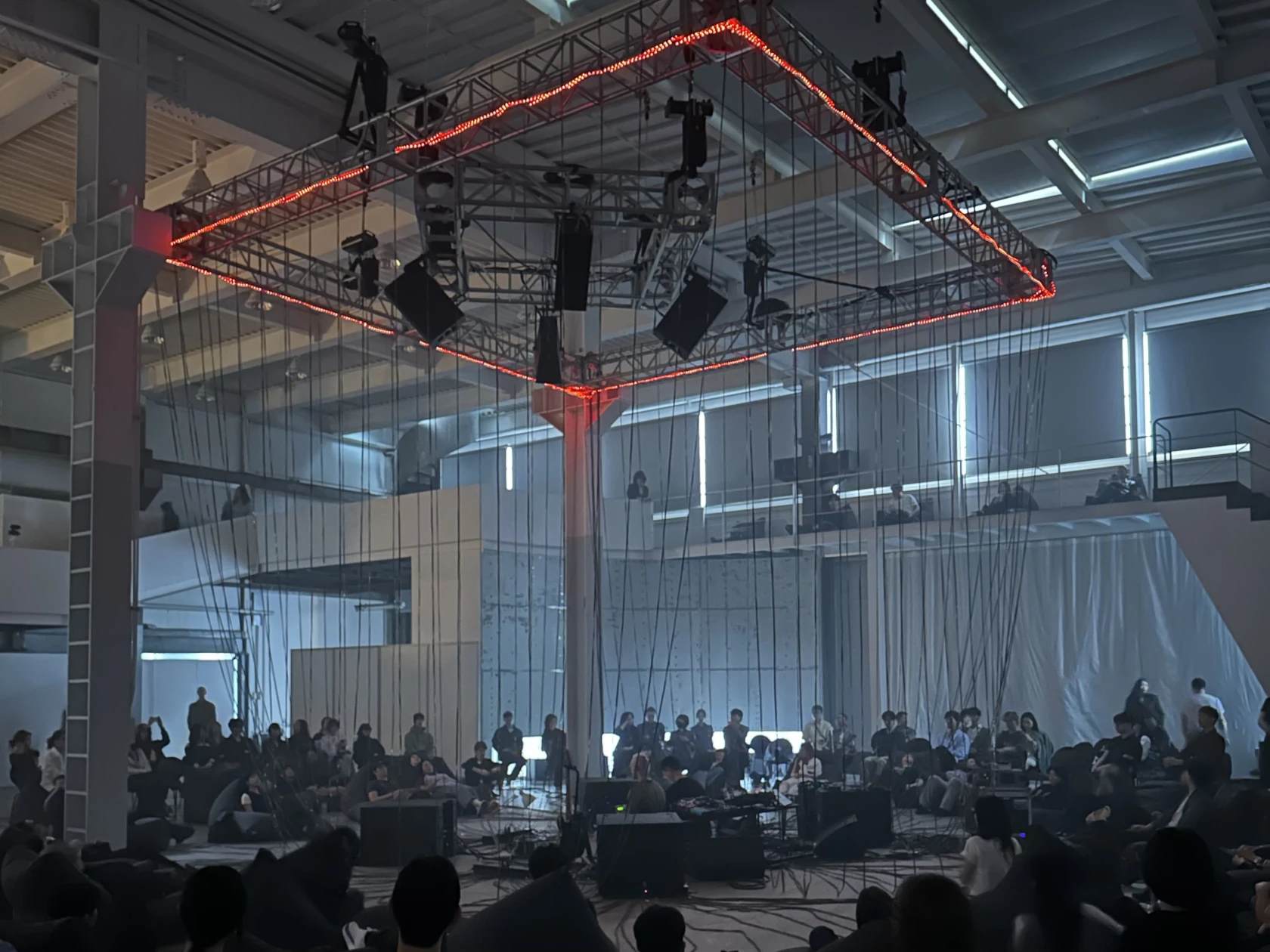
As audio design gains visibility, so do sound performances and listening sessions. In Seoul, the collective Ceiling Service has been drawing attention with highly aestheticized setups for its listening events.
“Sound system culture has taken over UK art.” The big thing in luxury fashion is “luxury sound.” Hi-fi is a “mainstream marker of distinction.” And “listening has become cool.” These aren’t my words, but those of a national newspaper, a fashion magazine, an Instagram account dedicated to trends, and the internet’s favorite vinyl-playing music nerd. However, they all point to the same phenomenon and cite many of the same examples.
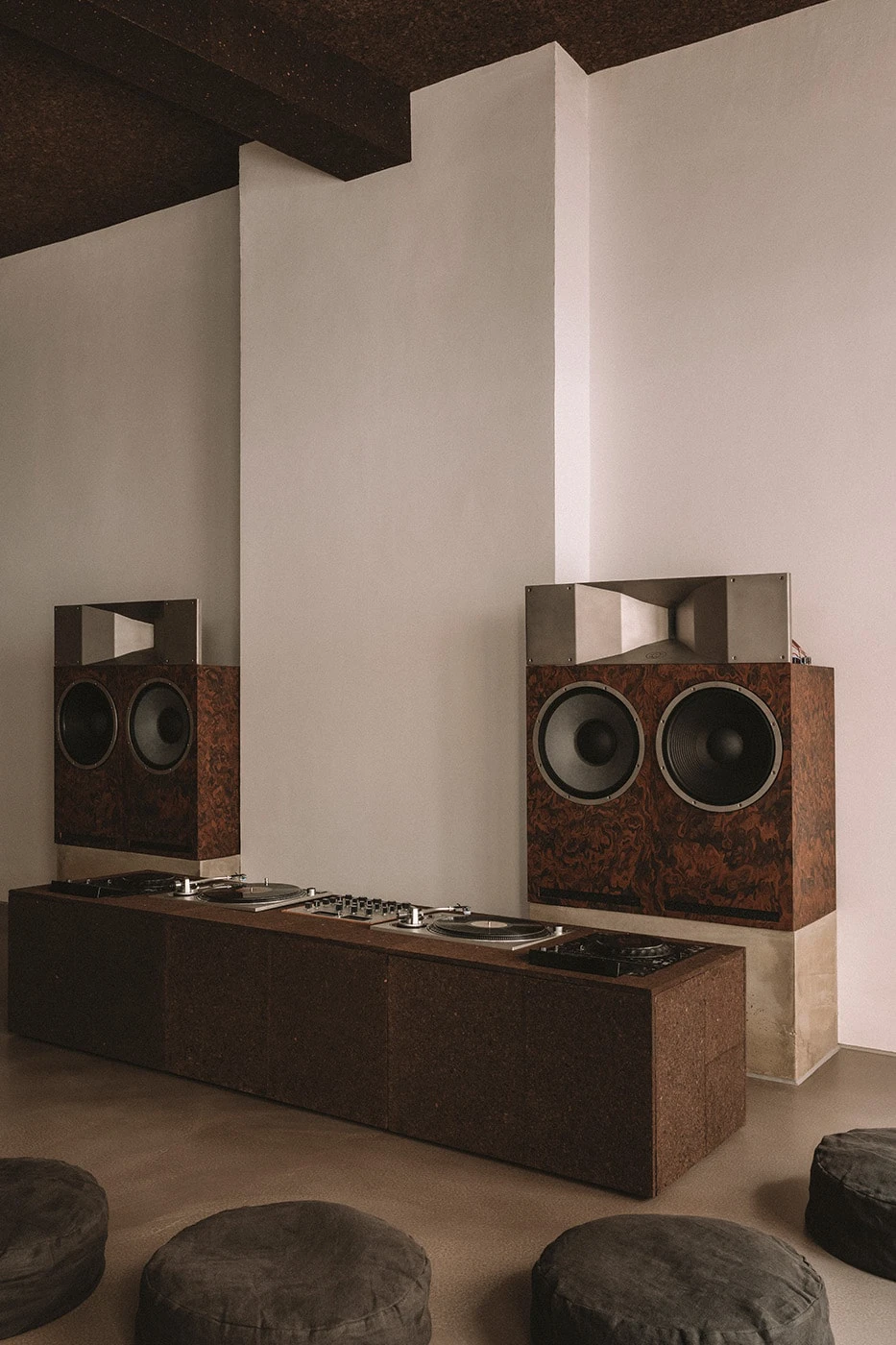
If you’re as criminally online as me, you probably already know what I’m about to mention. And if you’re also a man, as most audiophiles are, then you definitely know what I’m about to mention (more on that gender disparity to come!). I’m talking about that refined, mid-century style listening room Valentino opened for a few months; countless new listening bars inspired by Japan’s decade-old jazz cafes; and Ojas’ horn-wielding, handmade, beautiful speakers found in all the most hype-inducing places (like Supreme stores). They show how in this age of streaming and cheap Bluetooth audio equipment, people are taking the time to really listen to music on a proper sound system. It’s great, right?
“People are abusing the history of hi-fi to make their commercialized thing.“
Femi Shonuga-Fleming
“People are abusing the history of hi-fi to make their commercialized thing,” Femi Shonuga-Fleming, a designer, architect, and sound artist who performs as Sadnoise, tells me on a call from Providence, where he’s just completed an architecture degree and written a thesis on sound as a new media lens for architecture. He builds his own speakers, a self-taught side gig helped by “weirdo ’90s and early 2000s web logs and speaker build pages,” as well as occasionally reviewing New York sound systems on Instagram (a practice that’s led to some lively comment sections). You’d think he’d be pretty hyped that more people are engaging with his passion—and, in many ways, he is—but he’s tired of it becoming a marketing trend. And he’s not alone.
As audio design gains visibility, so do sound performances and listening sessions. In Seoul, the collective Ceiling Service has been drawing attention with highly aestheticized setups for its listening events.
Meanwhile, new cafés like Trader HiFi in Hamburg are bringing the listening bar concept to Europe, combining music and drinks in carefully designed interiors. Photos: Clemens Poloczek
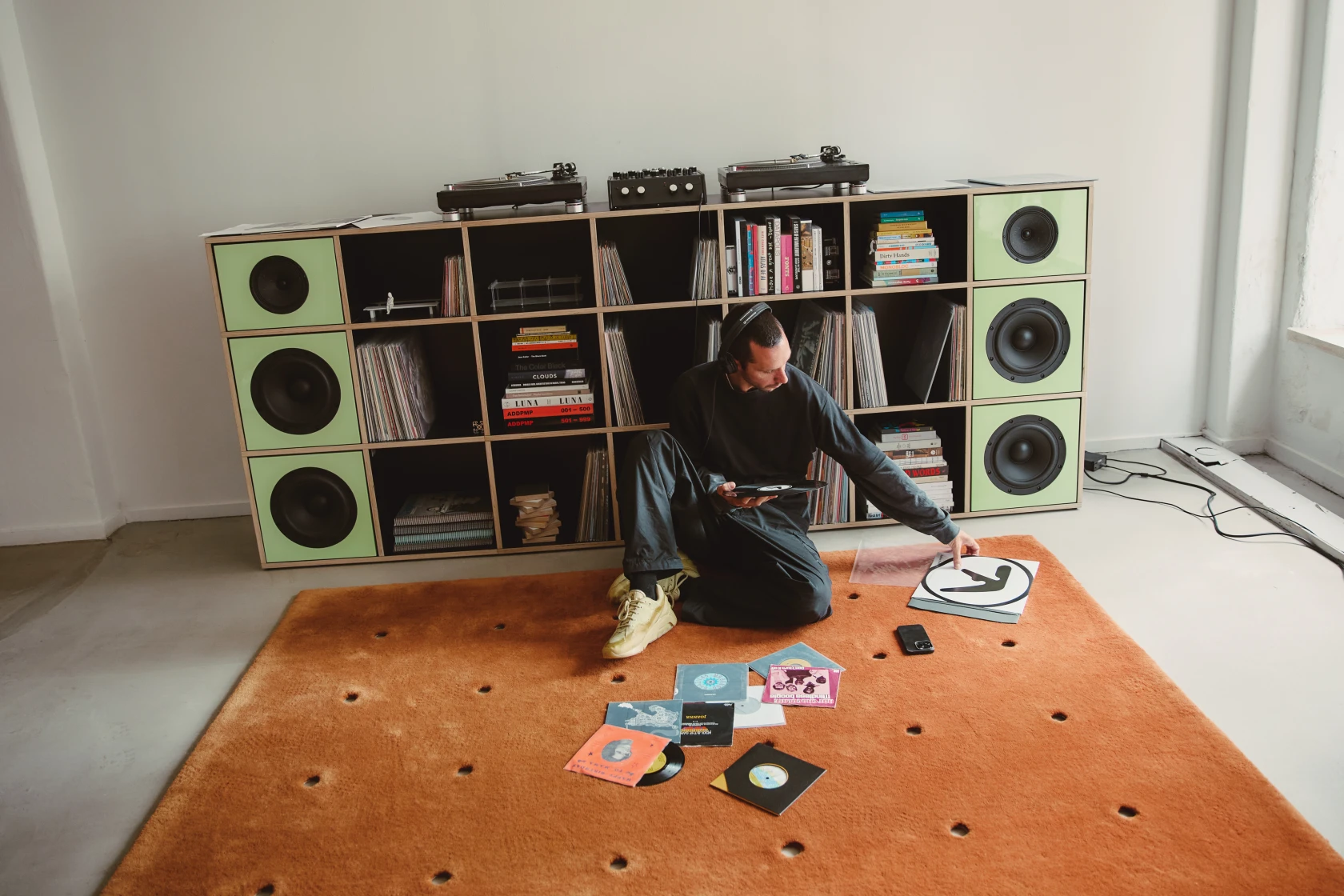
Or furniture brands like Tylko, which collaborated with Paul Coudamy to design a speaker system integrated into its modular shelving. Photo: Michele Margot
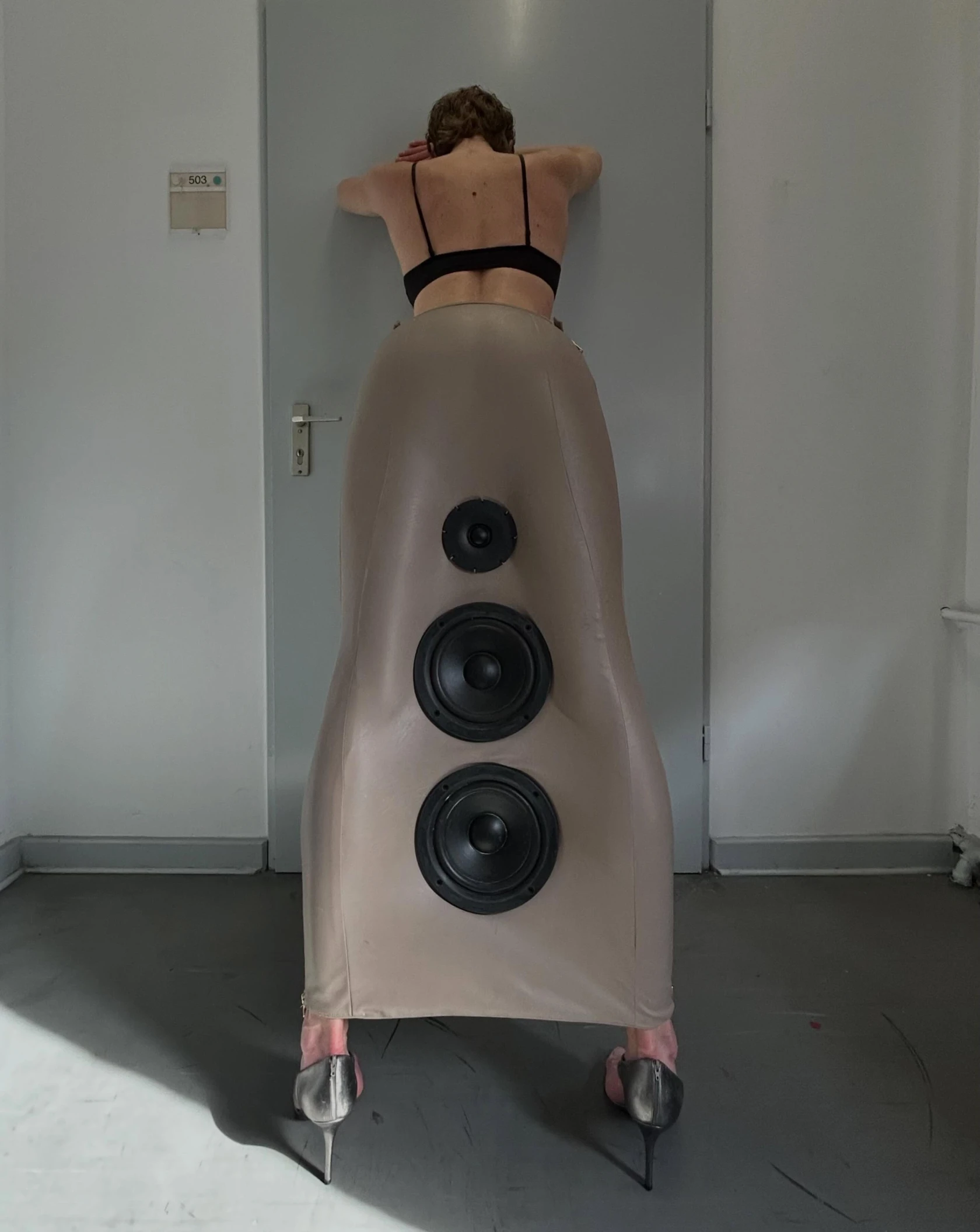
Berlin-based fashion designer Lenni Bubi integrated a fully functioning speaker system into a skirt. Photo: Jaden Walker
“Good music is great, good sound is a bonus, and it should be at the right level for whatever vibe you’re after. But when it’s deployed in a bar or by a brand just to feed off some trend, it’s often executed without any reason other than the novelty itself. And that is shit,” says David Michon, the consultant, editor, and producer behind the design Substack For Scale. “It’s lazy, it’s transparent, and it's never going to be good.” The trend, in this case, isn’t taking the time to really immerse in the sound of high-end equipment, nor is it painstakingly producing a system perfect for a specially treated room. Instead, it’s about appearing as though you’re doing those things.
Look around, and everywhere projects exist where sound quality is almost irrelevant because the inferred taste that comes from aligning with hi-fi culture is critical. What other reason does Campari have for placing two gorgeous maroon speakers in the center of its Paris Design Week pop-up? Or why else is Zara installing huge speaker drums into the walls of its Bad Bunny pop-up? Don’t get me wrong, some of these projects have talented, well-informed blokes (and it is almost always blokes) working on them, and I don’t blame them for taking on a well-paid project. I’m not here to look down on any independent designer creating bespoke speakers, but I will talk about the weird cognitive dissonance that comes with seeing hi-fi equipment used more as a pretty prop than something to play music through. That is, to give it a catchy name, speaker slop.
Tech magazine “What Hi-Fi?” found a prime example of this in a listening bar that’s “excellent Instagram fodder but without the genuine desire to really enjoy the music.” Shonuga-Fleming recently visited a bar with great vibe but a confused system combining random bits of trendy equipment—JLB, Klipschorn, and Altec speakers all running off McIntosh Monoblock amplifiers—“It sounded crazy,” he says, “people are throwing shit at the wall. They need to take a step back, think about it, calibrate it.” But it’s Nils Sorger, a product design graduate who recently created his first speaker, who has the most egregious example: in Seoul, where the hi-fi hype is a few years ahead of Europe and America, he says, “every store has speakers that are way too big for the space, and some aren’t connected. They are purely there for visuals; a Bluetooth speaker in the background plays music.” The slop doesn’t get any sloppier than that.
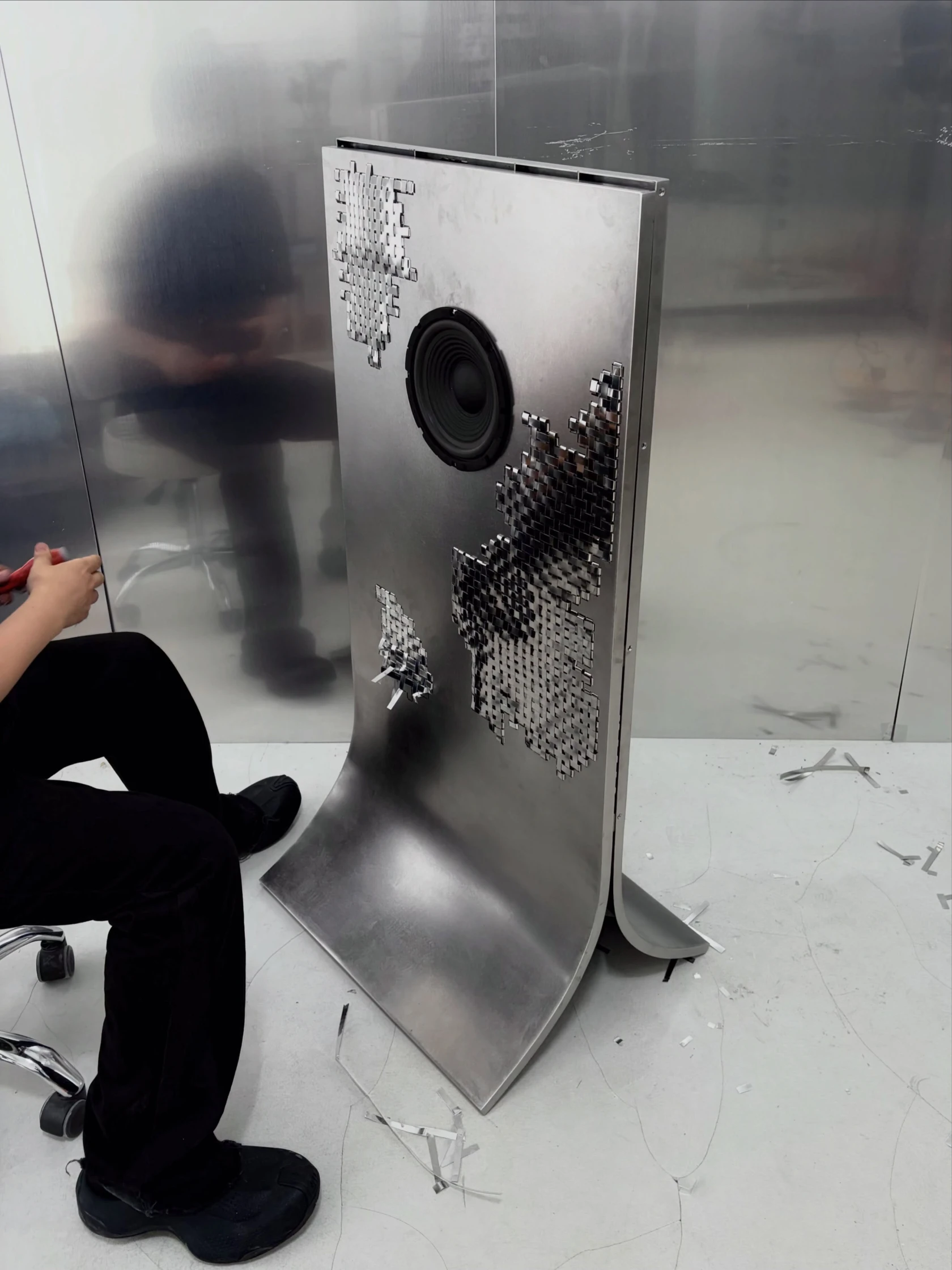
A speaker by Seoul-based creative studio Hardworkup, created as part of Singaporean fashion and accessories brand Charles & Keith’s 30th anniversary.
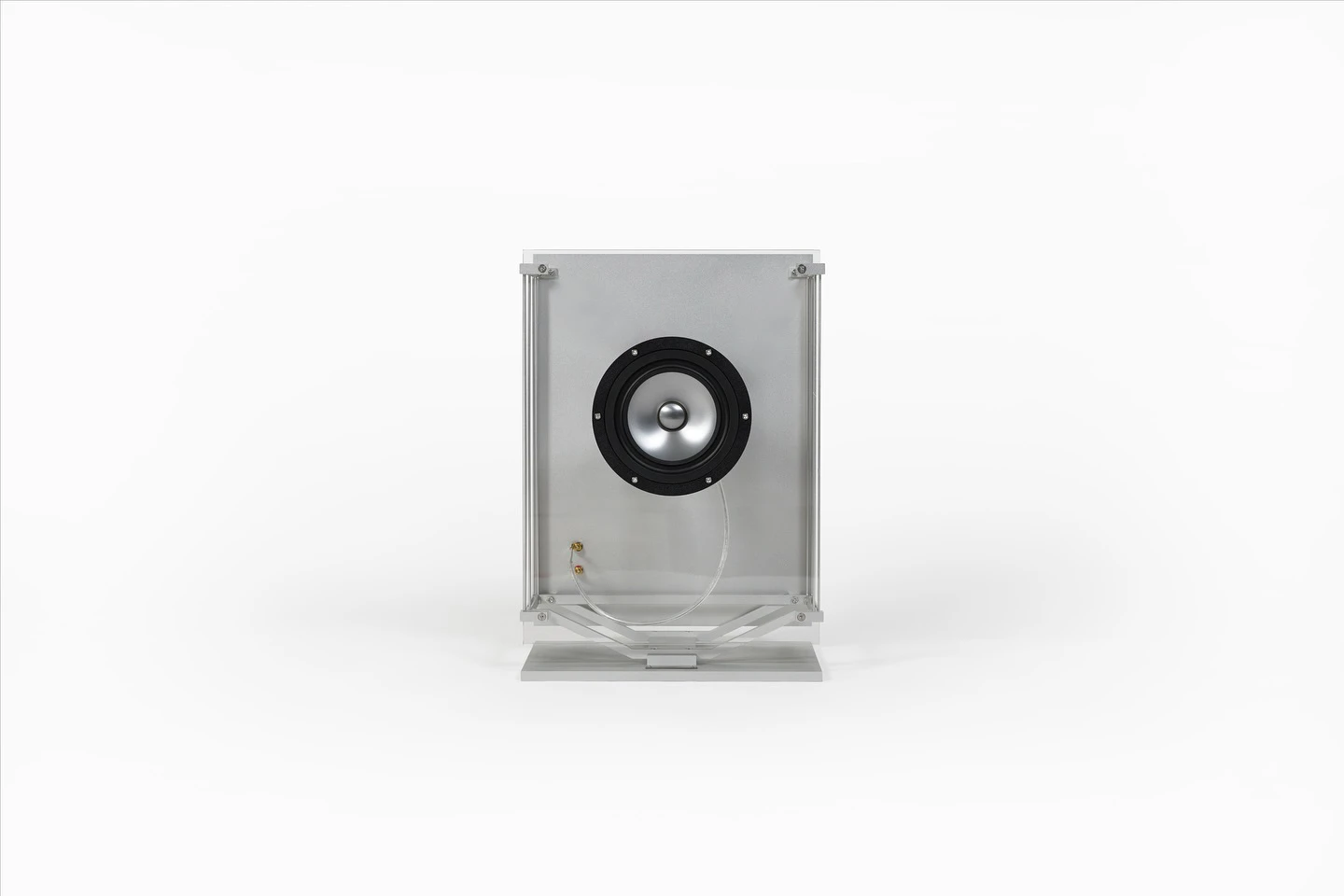
The modular Lamengo speaker by South Korean design studio GGJH, which primarily works on interior and spatial design projects. Made from anodized aluminum and acrylic.
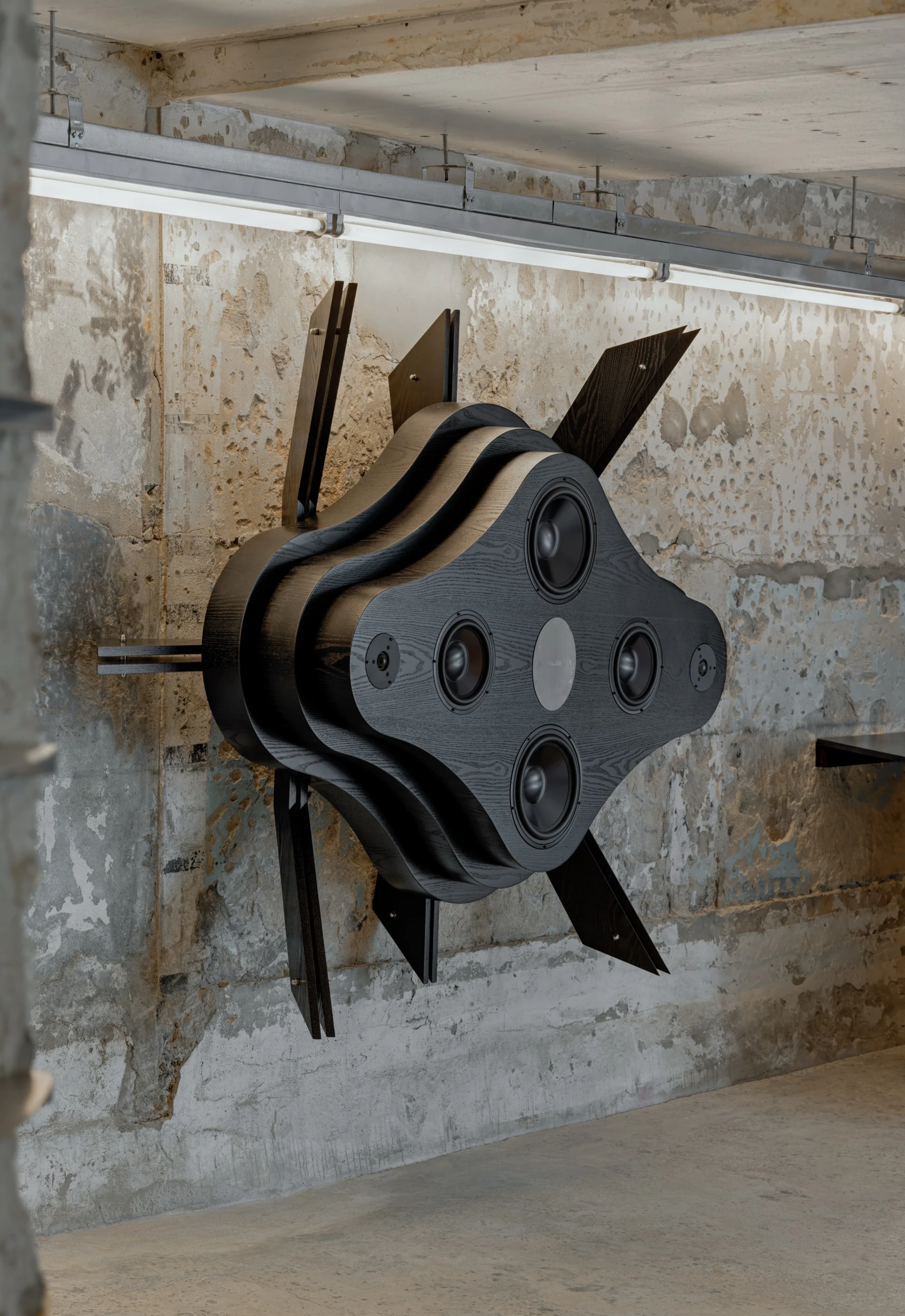
A Pokémon-inspired speaker designed by artist Melovemealot in collaboration with Gus of Seoul-based creative design studio Otto Dept, which works across interiors, furniture, and objects. Its spikes reference traditional Korean roof tiles.
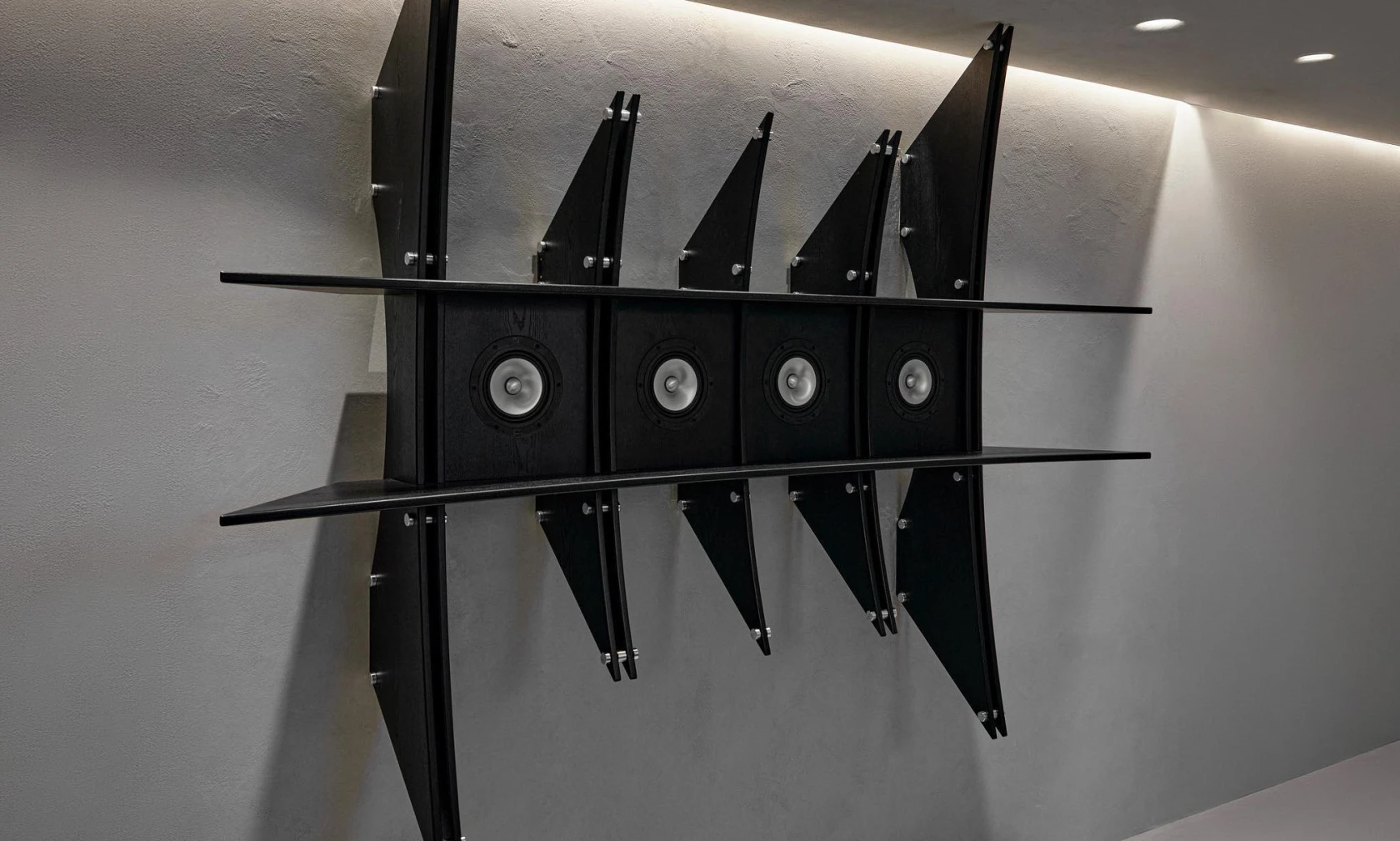
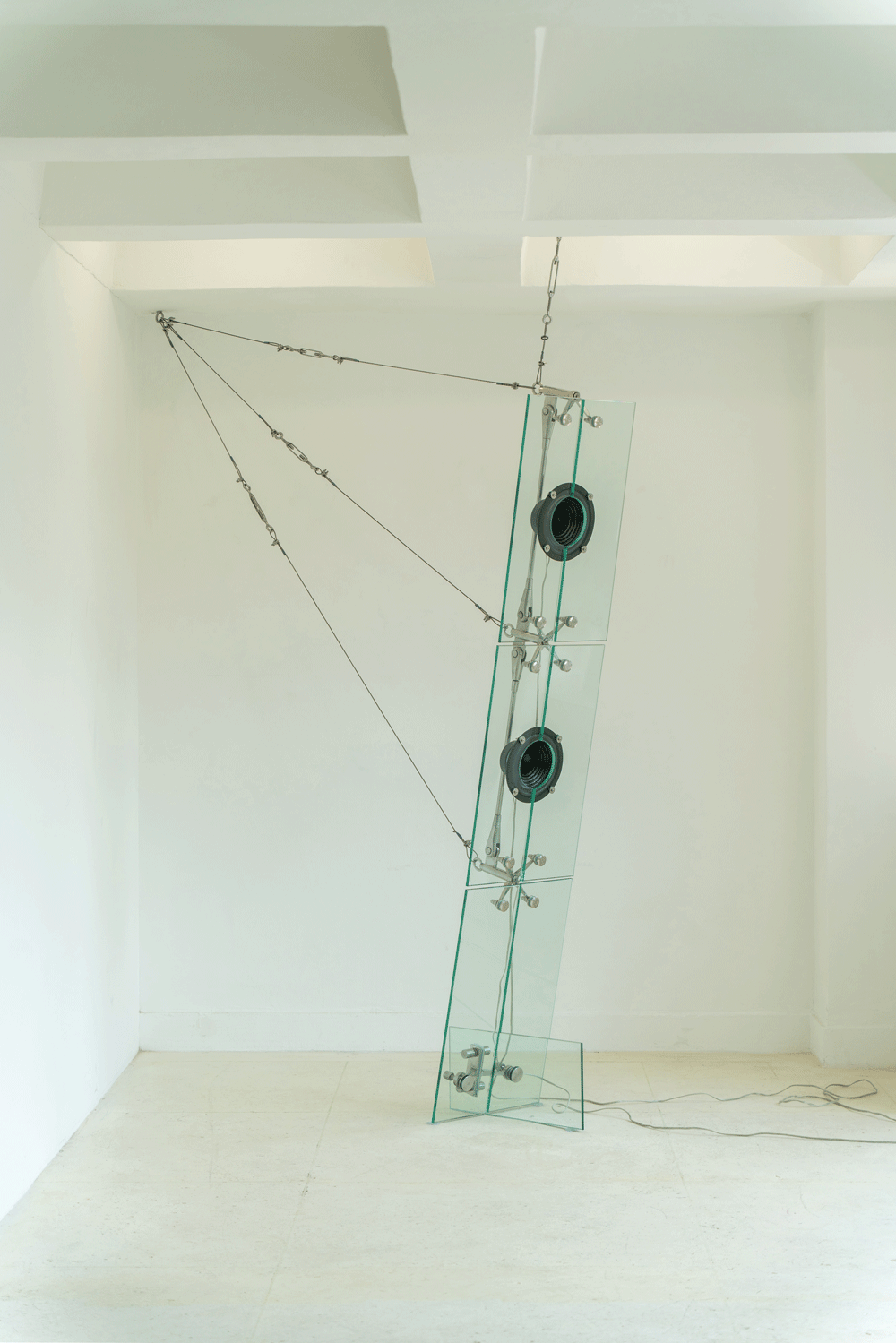
A sculptural speaker installation made from glass panels and tensioned steel cables by Seoul-based design studio Practice, presented as part of the exhibition Unnamed Room in 2026.
The internet, specifically Instagram and TikTok, is incredibly adept at flattening culture. It takes something with a real community, strips it down to a superficial aesthetic, and then replicates it to death. Just think of what it’s done to the humble hobby of jogging, or the once-anarchist streetwear world. Now that hi-fi has entered the algorithms, something similar is happening. But then again, maybe I’m taking it all too seriously.
“It sucks… but you can’t control what brands do,” says bespoke sound system maker David Chen with a shrug. “If there are better-sounding systems in more spaces, then as a whole that is always a positive thing.”
Jason Norman, a 54-year-old from Texas whom I connected with after he shared a great article on audiophilia via the r/audiophile Reddit, has a similarly positive take: “In the modern world, there’s a desire to pursue any hobby that could make money. So I’m a bit jaded, but I’m also seeing younger people becoming interested in quality,” he says. “That is good: the interest, the way it shapes the market, the emphasis on quality. I hope that translates into more people getting interested in boutique audio hardware brands and better streaming services than the disastrous poison of Spotify.”
“It sucks… but you can’t control what brands do.”
David Chen
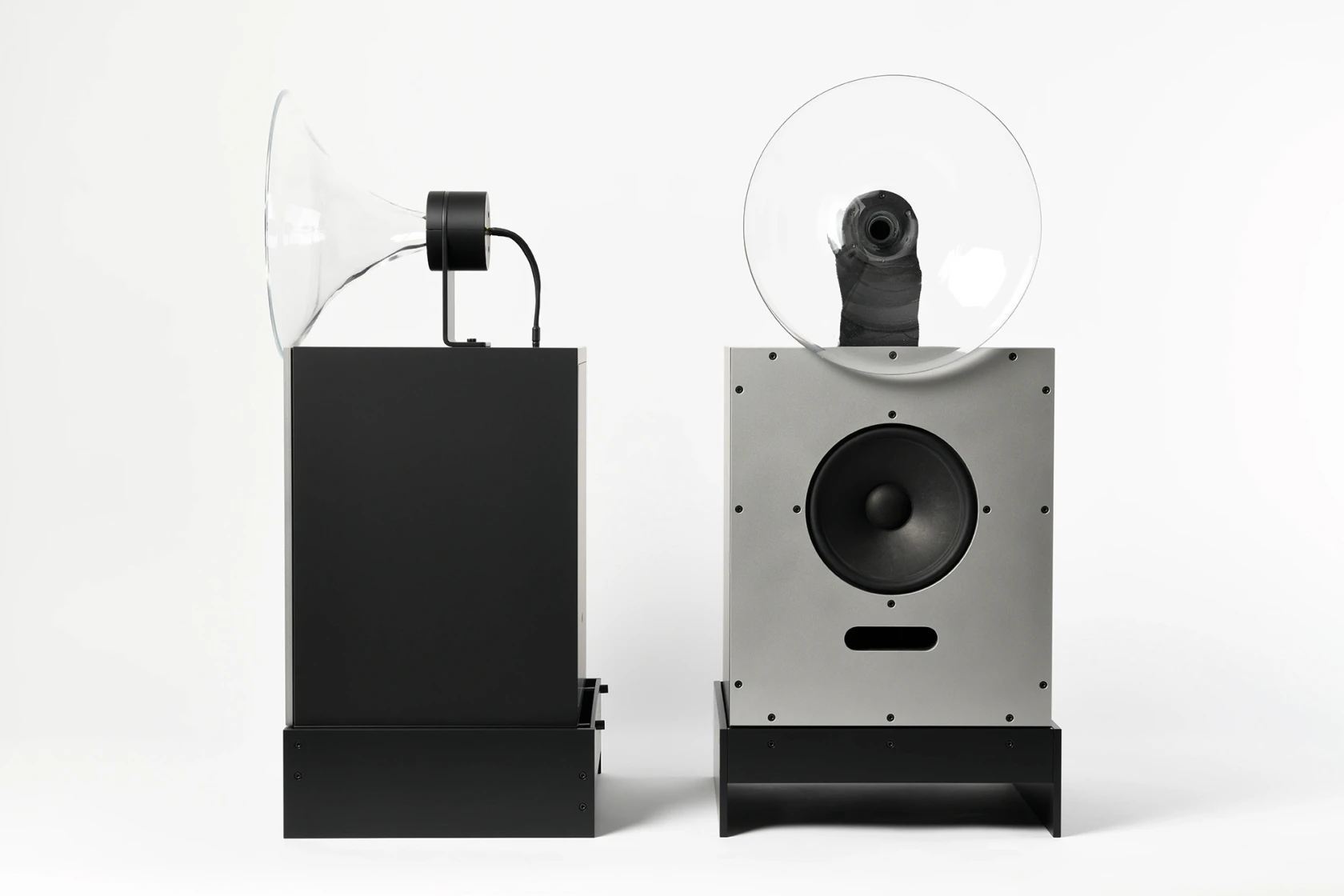
Sorger is one such young person. Inspired by Devon Turnbull, whose vintage-inspired, horn-loaded Ojas speakers have made him the poster child for a new generation of audiophiles, Sorger created a speaker with a hand-blown glass horn—“you can almost hear the hand of the glassmaker because each one approaches it differently,” he says—and then, during an exhibition at Berlin Art Week, played a composition using recordings he’d taken at the glassmaking workshop. Chen has a similar background, being a design engineering graduate, and alongside building speakers, he’s reinvented the lollipop headphone, an old-school single-ear DJ headphone, in sleek metal with added shoulder support for more comfort. You might’ve seen DJs like Benji B and Steve Julien with one in hand.
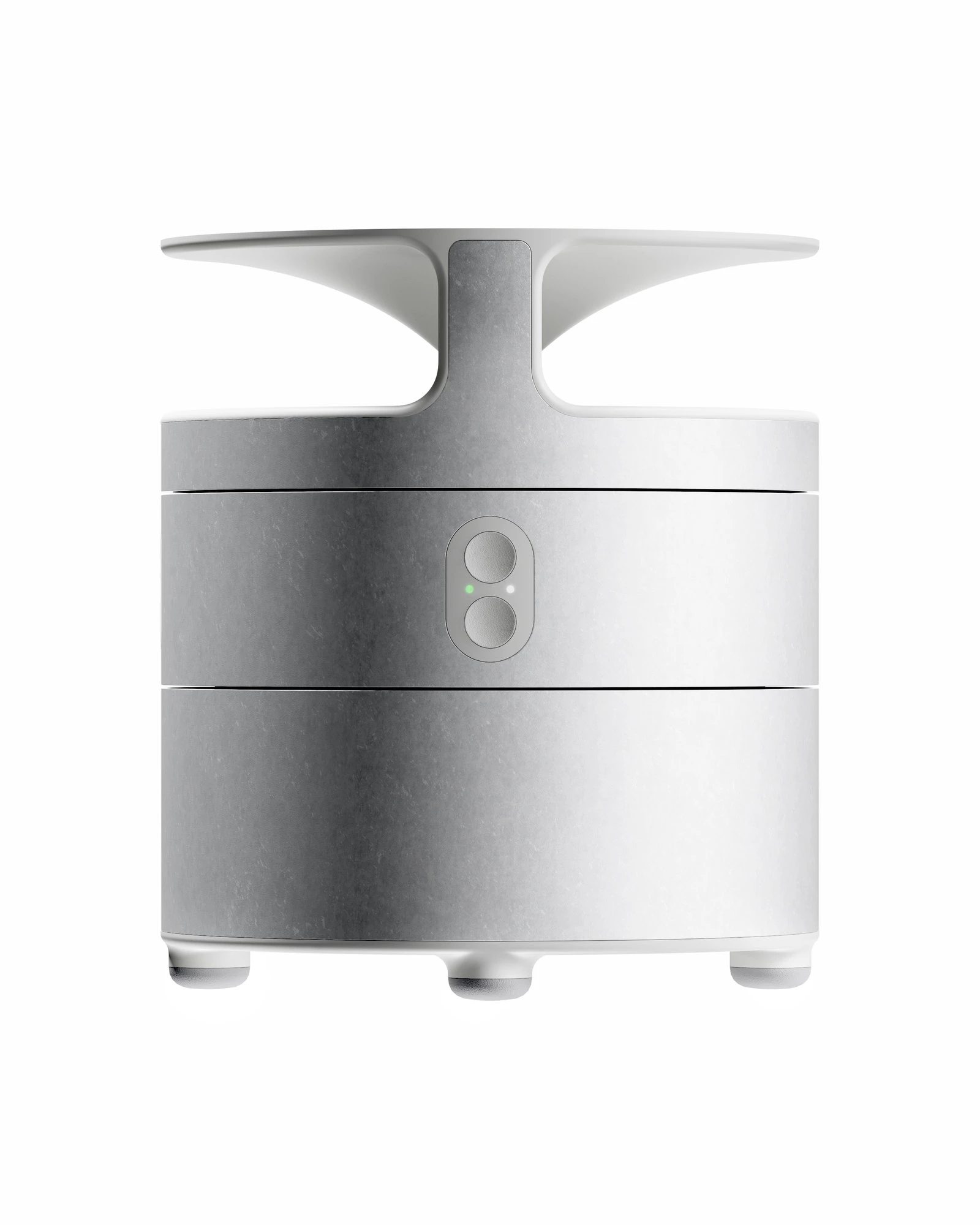
The more people I speak with, the more interesting projects we discuss. Shonuga-Fleming is a big fan of Nowadays, a 5,000-square-foot New York club that doesn’t allow phones on the dance floor and is co-owned by Craig “Shorty” Bernabeu, whose other company, SBS Slammer, specializes in custom nightclub sound systems. Michon, meanwhile, highlights Omni Tone, a modular, omnidirectional speaker made of circular materials by graduates of Switzerland’s ÉCAL university.
The Tröte speaker by Nils Sorger, made partly from hand-blown glass.
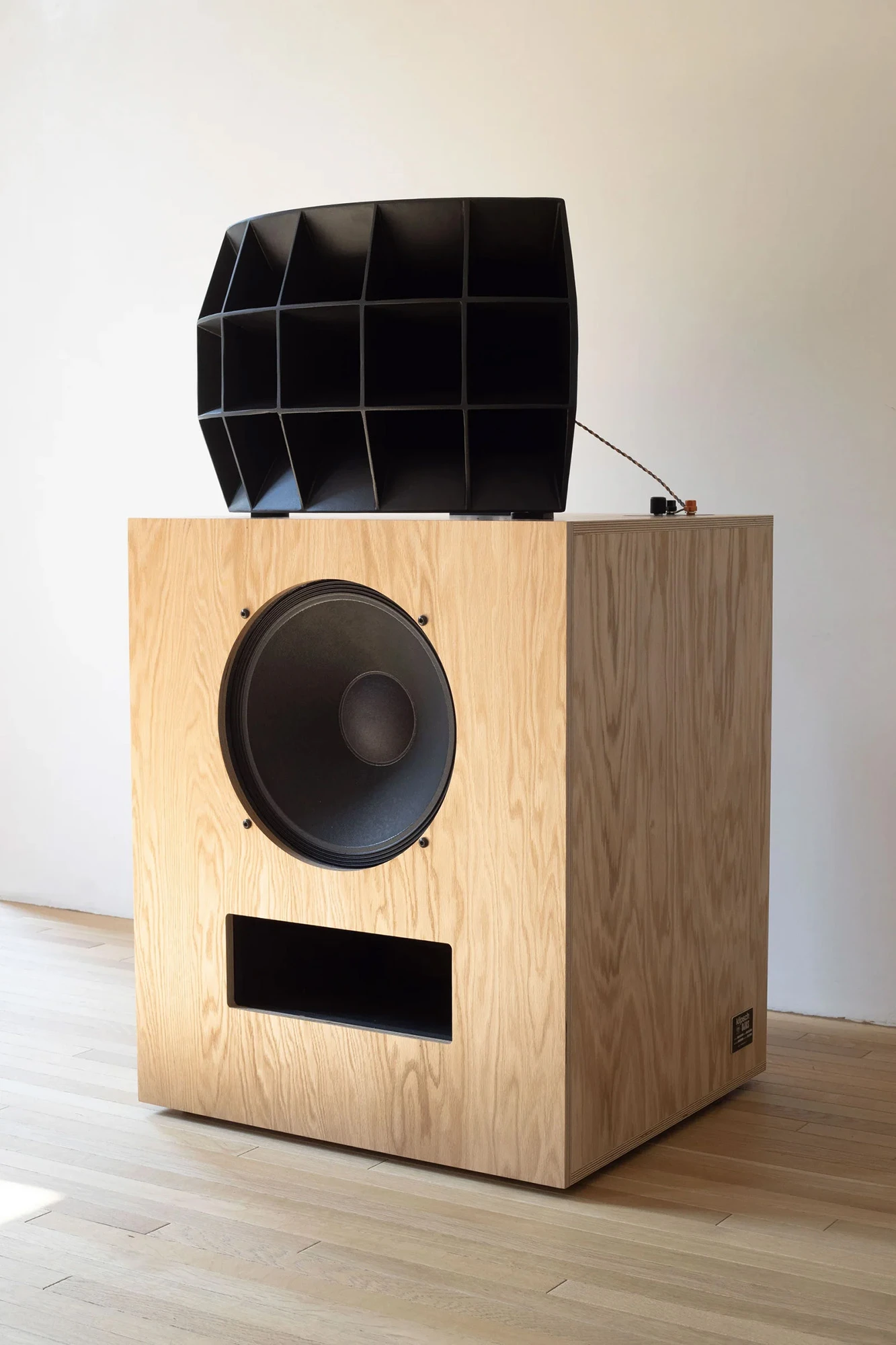
Ojas speaker by audio engineer Devon Turnbull.
Modular Omni Tone speaker made from recycled materials.
This is the good stuff that comes out of hi-fi being a trend. And it’s hopefully what’ll last. “Speaker companies or clubs or coffee shops that hopped on the trend will die out. Places die all the time,” says Shonuga-Fleming. “It’ll mellow out, and people will give up on it. Trends dying is always a good thing because it opens up space for people to not feel alienated going into something.” Who knows, maybe it’ll even open the space up to a wider range of genders.
“The masculine urge to fetishize oxygen-free copper wires and outsized subwoofers necessitates audiophile terms like WAF (short for wife acceptance factor).”
Tom Barker
The masculine urge to fetishize oxygen-free copper wires and outsized subwoofers necessitates audiophile terms like WAF (short for wife acceptance factor). “It’s not used as a derogatory term,” Jason Norman assures me. “A high WAF means you’re on a better journey than someone who has to justify their massive ugly industrial equipment. My wife tolerates the hobby, but I can’t show up with a pair of Tekton Double Impact or Wilson Audio Watt+Puppy and expect to be happily married.” A few minutes of prodding about on audio blogs reveals this is a common dynamic. It also shows just how male-dominated this niche is.
More visibility will mean better hi-fi in the long run, but it could also lead to a more diverse community. With time, as a wider range of people take an interest in high-end audio equipment, the bro-iness of it all will hopefully disappear. And, with any luck, the speaker slop will disappear with it.
Join our community to post comments.
Login
Create account
Recent Comments
No comments yet.